What makes moving a piano through a London terraced house difficult?
Controlled movement matters more than raw strength. A London terraced house can block a piano move through narrow halls, front steps, tight stair turns, awkward thresholds and limited parking. The job works only when the whole route is checked, protected and judged before anyone tries to lift.
Start With the Constraint: The House Decides More Than the Piano
A piano can be movable in theory and still be blocked by the house in practice. The front step, the threshold, the first hallway turn and the landing often decide the job before the piano has travelled far.
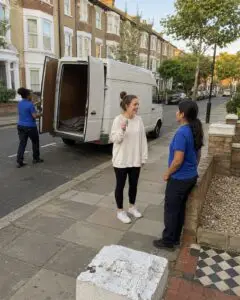
London terraces add pressure because space runs out quickly. A van may sit in a controlled parking zone, the front path may be short, and the hallway may narrow where a radiator, skirting board or internal door interrupts the line. Basement flats add another layer because the load may need to be controlled down steps before it even reaches the front door.
A sofa can flex, tilt and squeeze. A piano is heavy, rigid and awkward to angle. Its centre of gravity matters because the team must support the load throughout the turn, and they cannot simply pick it up and hope the corner works.
Good planning starts outside the property. The route should be measured, the difficult points should be named, and protection should be set before the piano moves.
Identify the Piano Type Before Anyone Talks About Lifting
“A piano” is too vague for a proper moving plan. Uprights, baby grands, grands and digital pianos create different problems at doors, stairs, turns and loading points.
A common upright can be far larger than people expect. Yamaha UK and Ireland lists a current Yamaha U1 upright at 153 cm wide, 121 cm high, 62 cm deep and 228 kg. The current Yamaha U3 is listed at 153 cm wide, 131 cm high, 65 cm deep and 246 kg. Those figures are a useful reality check because “just an upright” can still mean a rigid load well over 200 kg.
Width matters at the doorway. Depth matters at turns. Height matters when the piano has to be angled near a ceiling, stair underside or landing. Weight matters for the people, equipment and vehicle, but weight alone never tells the full story.
Before quoting a piano move in a London house, GT Removals asks for the piano type, clear photos and access details because a fixed price needs to reflect the route as well as the item. A make, model plate or photo of the full piano can stop a poor plan from being made around a guess.
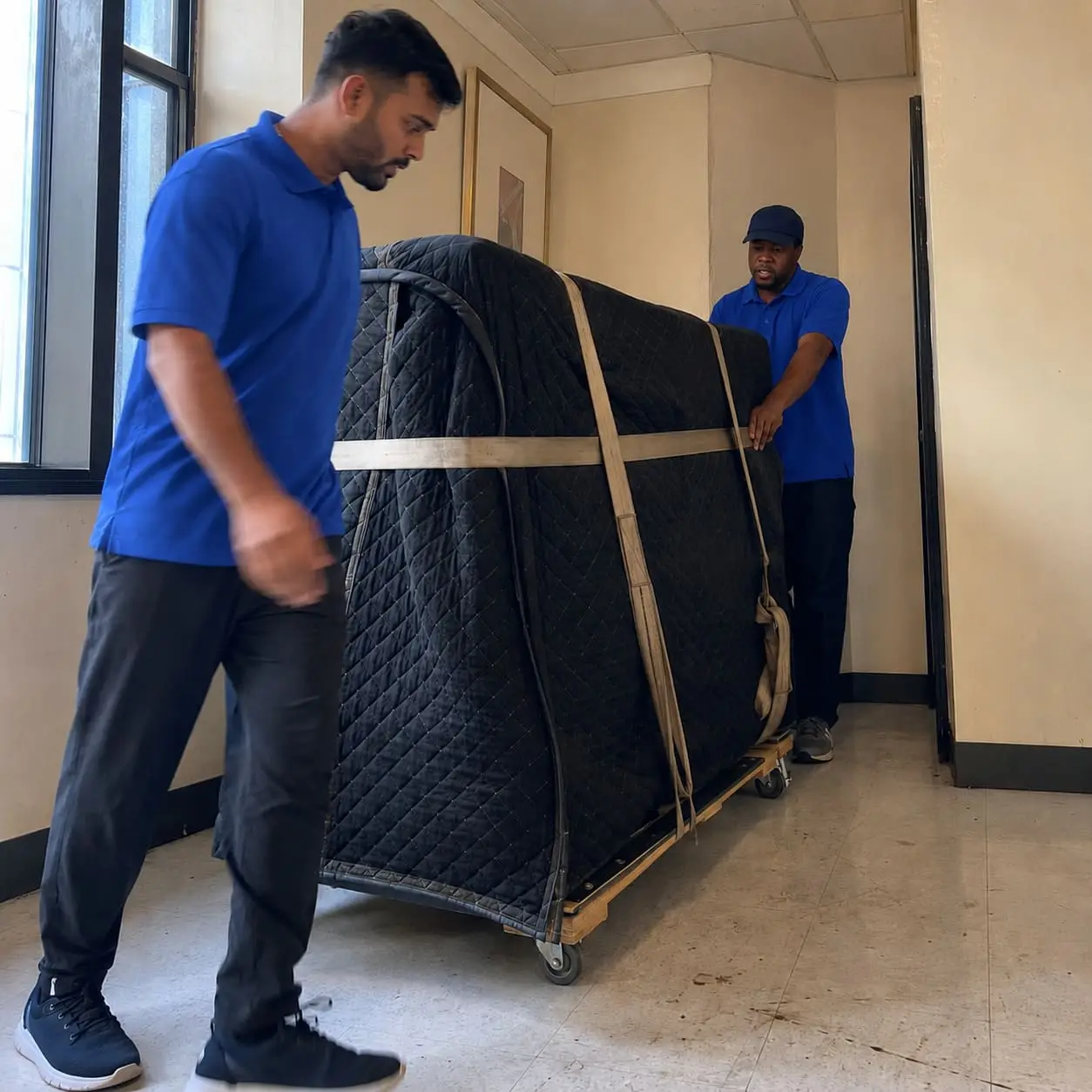
Specialist equipment and trained movers for uprights, baby grands, grands, and digital pianos.
Get a Free QuoteMeasure the Whole Route, Not Just the Doorway
The tightest point decides the route, not the widest doorway. A piano may pass one door and fail at the hallway turn, stair kink, landing or final room entrance.
A useful route survey follows the same path the movers will take. Work from the van position to the piano’s final place, then back again if the piano is leaving the house. Photos help, but measurements stop guesswork.
- Outside approach. Check the distance from the van to the front door, the path surface, gates, front steps and any slope.
- Entrance. Measure the front door opening, threshold height, door swing and any frame details that reduce usable space.
- Hallway. Note hallway width, radiator positions, skirting boards, pictures, furniture and the first tight turn.
- Stairs and landing. Count the stairs, photograph the turn, note ceiling height and show any banister or newel post that narrows the route.
- Final room. Measure the room door, mark the intended piano position and check whether the floor surface changes on the way in.
Door or banister removal can help in some homes, but nobody should assume it will be possible. Permission, fixings, tools, reinstatement and damage risk all matter. Window access also needs proper assessment because it is a separate lifting problem rather than a casual backup plan.
A video survey can be useful because it lets the team see awkward angles that a single measurement may hide. The best photos show the whole route, not just the piano.
Photograph the hallway from both directions and include the first tight turn. The reverse view often shows where the piano will need to be angled.

Assess Stairs, Turns and Thresholds as Load Control Problems
Stairs and corners are load control problems. The real question is whether the piano can be supported, angled and moved without losing control at the hardest point.
People often focus on how many bodies can lift the piano. The Health and Safety Executive defines manual handling as transporting or supporting a load by hand or bodily force, including lifting, putting down, pushing, pulling, carrying or moving loads. That wording matters here because a piano move is about supporting and controlling a heavy load throughout the route.
Under HSE guidance on the Manual Handling Operations Regulations, employers should avoid hazardous manual handling where reasonably practicable, assess unavoidable hazardous handling and reduce the risk of injury as low as reasonably practicable. HSE also states that the law does not set specific weight limits. A piano does not become safe because it falls under a neat number, and it does not become workable because extra people arrive.
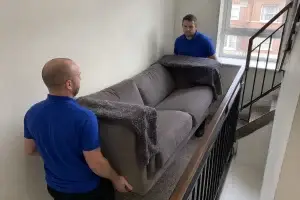
Tight turns create awkward postures. A hallway corner may leave one person with poor footing, another with limited hand space, and the piano at an angle that shifts its weight. Stairs add the problem of controlled ascent or descent, where the load must be held steady as each step changes the balance.
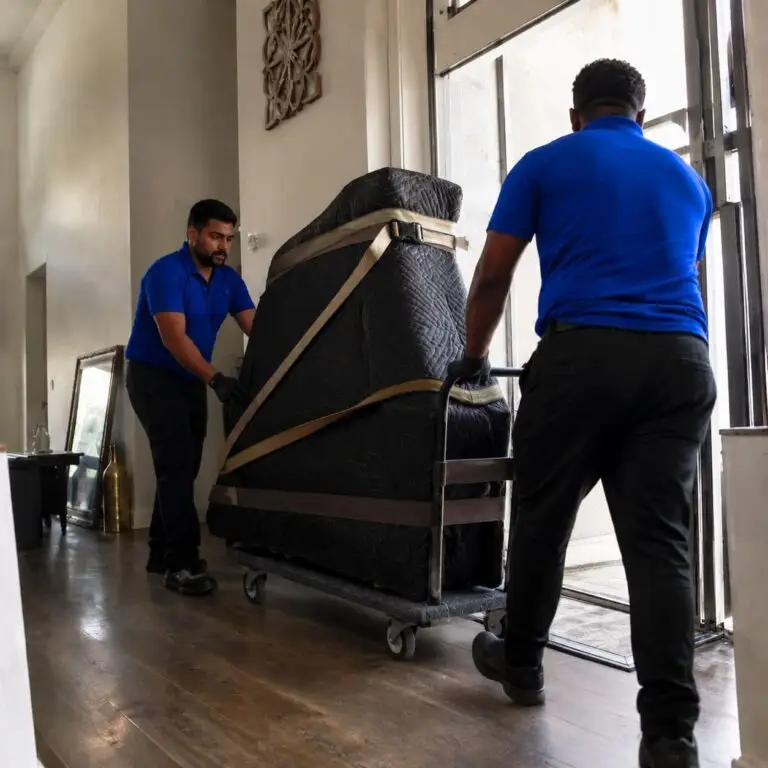
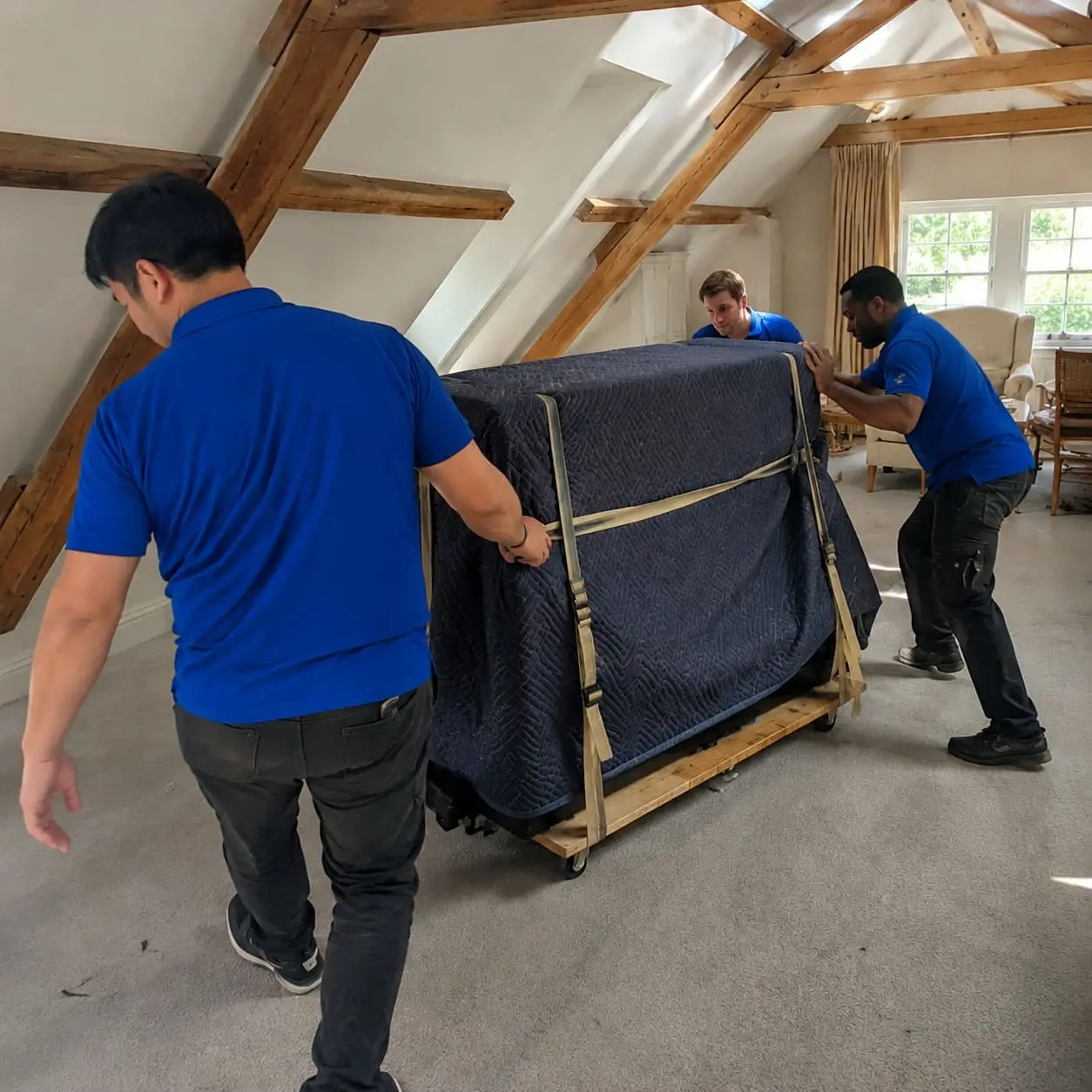
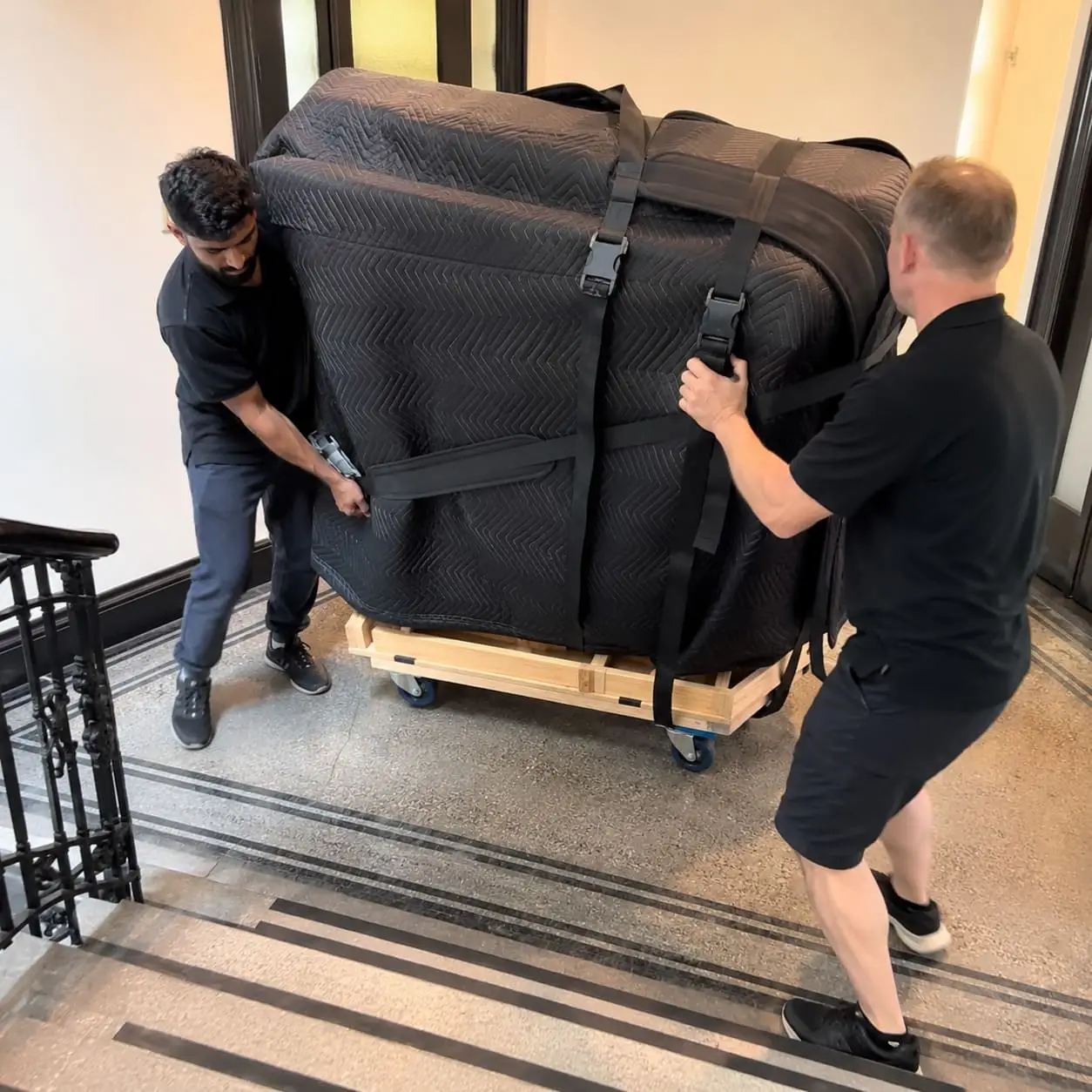
Equipment changes the task, but it does not cancel the access problem. A piano skid, ratchet straps and a stair-climbing trolley can improve control in the right setting. They still need room to work, a sound route and a clear stopping point if the move becomes unsafe.
Protect the House Before the Piano Moves
Property protection has to match the surface and the route. A polished floor, tiled threshold, carpeted stairs and plaster hallway wall each need a different kind of care.
Padded covers help protect the piano, but the building needs attention too. Floors need suitable protection, door frames need clearance, and tight corners need planned turns rather than last-second twisting. Raised thresholds are easy to underestimate because they can catch equipment, change the angle and slow the move at the most exposed point.
GT Removals uses piano skids, ratchet straps, padded covers and stair-climbing trolleys where the route calls for them. Its piano moves are also covered by £30,000 goods in transit insurance and £5 million public liability insurance on every job. Insurance should never be treated as permission to take risks, but it is part of a properly planned service.
| Good preparation | Risky shortcut |
|---|---|
| Clear the hallway before the team arrives | Move the piano around rugs, lamps and loose furniture |
| Match floor protection to wood, carpet or tile | Throw down one blanket and drag the load |
| Plan the turn at each tight point | Force the piano round the corner once it jams |
| Assess doors and banisters before removal | Remove fittings casually and hope they go back cleanly |
Small objects create large problems during a piano move. A hallway table, loose rug or picture frame can take away the few centimetres that the team needs for a safe turn.
Check the van position against the front door before moving day. A short carry can reduce handling time and give the team more control at the entrance.

Plan the Van Position and London Parking Early
Parking is part of the piano move because every extra metre adds handling. A long carry along a terraced street increases time, weather exposure and the number of moments where the load must be controlled.
Controlled parking zones can make this harder. In many London streets, the van cannot simply wait outside the house without a bay suspension, yellow line waiver or other borough arrangement. A Luton van with a tail lift also needs practical kerb space, because loading a piano is not the same as loading boxes.
Merton Council gives a useful local example, not a London-wide rule. In Merton, a resident in a controlled parking zone can apply to suspend a parking bay for moving house. The council says applications for a parking suspension or yellow line waiver must be made at least ten full working days before the requested start date, and one suspended bay is approximately five to six metres long.
From 21 April 2026, Merton lists a non-refundable admin fee of £36.75, a first-day parking bay suspension charge of £36.50 per bay and a £40.00 daily charge from day two per bay. Borough rules and fees vary, so the relevant council process must be checked for the address.
A suspension is still not a perfect guarantee. Merton says domestic removal suspensions are marked with warning signs and cones, but the council does not operate a towing service if another vehicle parks in the suspended bay. Poor van access can turn a planned piano removal into a longer, more exposed carry before the front door is even reached.
Know When a Standard Piano Move Has to Stop
Some routes are unsuitable for a standard piano move. A piano that cannot be controlled through the hallway, stair turn, window route or final doorway should not be forced through because determination does not change the width of the landing.
Window access may be possible in some properties, but it needs the right permissions, equipment, lifting method and reinstatement plan. A second survey may be needed where the first route fails or where an excessive angle would put the piano, property or people at risk. After the move, tuning may need attention, so a piano tuner is often part of the wider plan for anyone who cares about how the instrument plays.
The useful test is simple: can the piano be controlled safely from van to final position? The common misconception is just as simple: a piano move mainly needs enough strong people. It does not. Strength helps only after the route, equipment, protection and stopping point have been properly judged.
We can move your piano safely as part of your full house move.
Get a Free QuoteFrequently asked questions
Can you move a piano through a narrow hallway?
A piano can move through some narrow hallways, but the answer depends on the piano dimensions, the turn, door frames, radiators, ceiling height and available hand space. The tightest point in the full route decides the plan.
Will an upright piano fit through a standard door?
Some upright pianos pass through some standard doors, but doorway width alone is not enough to judge the move. The piano’s depth, handling angle and space after the door matter just as much.
Can an upright piano go up stairs?
An upright piano can go up stairs in some homes when the route, stair width, turn, landing and equipment all allow safe load control. A stair-climbing trolley or piano skid may help, but equipment cannot make every staircase suitable.
How much notice is needed for a London parking suspension?
Notice periods vary by borough. Merton Council, for example, requires at least ten full working days for a parking suspension or yellow line waiver, so parking should be checked early.
Does moving a piano affect tuning?
Moving a piano can affect how it settles and plays, especially after changes in position or environment. A piano tuner can advise after the instrument has been moved and allowed to settle.