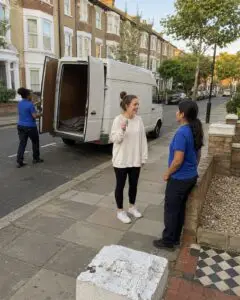

Do you need to arrange a parking suspension for a removal van in London?
A parking suspension is needed when the removal van must occupy a marked bay for longer than normal loading rules allow. In London, the right route depends on the street controls, the time needed, and whether the road is borough-managed or a TfL red route.

Parking Suspension Basics
Picture the van arriving at 8am. The closest residents’ bay is full, the crew has to park around the corner, and every wardrobe box now travels much farther than planned. A small access problem can turn into extra carrying, blocked doors, slower loading, and a higher risk of a PCN.
A parking suspension is an official way to take a specific parking bay out of normal public use for a set time. For a move, that usually means reserving a bay close enough for the removal van to load safely and efficiently.
London Councils says drivers cannot load or unload in a suspended parking bay unless they requested the suspension. That point matters because cones, bins, handwritten notes, and friendly messages to neighbours do not replace formal permission.
Marked bays matter here. A parking bay suspension for moving house only works where a bay exists, such as a residents’ bay, pay and display bay, or shared-use bay in a Controlled Parking Zone, often called a CPZ. Yellow lines, red routes, estates, and private forecourts may need a different answer.
The Right Permission
London moving van parking usually falls into three routes: normal loading rules, a parking dispensation, or a parking suspension. Choosing the wrong one can mean paying for permission you did not need, or relying on a short loading window for a move that needs the van to stay put.
| Option | Best suited to | Main limit |
|---|---|---|
| Normal loading | Quick, active loading where the van is being used continuously | Time limits apply and loading must be allowed at that location |
| Parking dispensation | Cases where more loading time or restricted stopping needs permission | Permission must be arranged with the right authority |
| Parking suspension | Reserving a marked bay close to the property | Usually applies only to bays that can be suspended |
London Councils says loading and unloading may be allowed on single and double yellow lines for up to 40 minutes where loading is observed, provided the vehicle does not cause an obstruction and no loading ban applies. In parking bays, including pay and display and residents’ bays, the stated maximum during controlled hours is 20 minutes.
Those time windows suit a sofa delivery or a small number of boxes far better than a full flat move. Continuous loading also has a plain meaning: the van is being actively loaded or unloaded. It does not mean the vehicle can sit outside while everyone spends long periods dismantling beds upstairs.
A parking dispensation for moving house may be the better route where a bay suspension is not the right tool, but the van still needs permission to stop for longer. Street signs decide more than guesswork does, so read the lines, bay plates, loading plates, and controlled hours before choosing the route.
We cover all 32 boroughs from two London bases, with honest pricing and full insurance on every job.
Get a Free QuoteBoth Address Checks
Parking needs checking at collection and delivery, because the rules can change completely between the two kerbs. One address may sit in a quiet CPZ, while the other may be on a main road with red route controls.
Look at the street as the driver will see it. The most useful access notes cover the bay type, the nearest building entrance, any single or double yellow lines, loading signs, red line markings, estate controls, and the likely walking distance from van to door. Photos of the bay, signs, and entrance can make this much clearer than a postcode alone.
A practical check should separate what you can use from what can delay the move:
- Look for: residents’ bays, pay and display bays, loading bays, CPZ signs, bay plates, yellow line loading signs, red line markings, and the safest van position.
- Avoid assuming: the same council controls both addresses, the bay outside the door will be free, a neighbour’s space-saving objects will hold the bay, or a borough application covers a red route.
GT Removals often plans London moves around these access details because parking distance affects loading time, vehicle choice, and the fixed move plan. A second-floor flat with a clear bay outside is a different job from the same flat with a long carry from the next street.

Check both addresses separately, because a calm residential street at one end of the move can sit under a completely different parking regime at the other end.

Borough Application Details
A borough parking suspension is usually arranged through the local London borough council for borough-controlled bays. The task becomes far easier if you gather the details before opening the application form.
Have these ready before you apply:
- Reason for the suspension. State that the bay is needed for a house move, flat move, office move, or removal vehicle access.
- Bay type and number of spaces. Councils may ask whether the space is a residents’ bay, pay and display bay, shared-use bay, or another marked bay.
- Exact location. Give the street name and the bay position, using nearby door numbers, bay markings, or time plates where relevant.
- Dates and times. Match the request to the loading and unloading window, not just the day of the move.
- Vehicle details where requested. Some forms ask for the removal vehicle or applicant details at the application stage.
The Royal Borough of Kensington and Chelsea gives a useful example of the kind of information councils may ask for. Its suspension form asks for the reason, the type and number of spaces, the street name and bay location, and the start and end dates.
Application does not mean approval. Kensington and Chelsea also states that submitting a form is not confirmation, and the suspension is approved only once full payment has been received. Other boroughs have their own process, so treat the council confirmation as the point that matters.
GT Removals asks for parking and access details early because the permit route and the carrying distance shape the working plan. Agreeing who handles the council application before the move date avoids two people assuming the other person has done it.
Red Route Dispensations
Red routes follow a separate process from ordinary borough-controlled residential streets. If the road outside the property has red lines, the application path may move from the borough council to Transport for London.
Transport for London says red route rules can sometimes be relaxed in special circumstances, including moving house. TfL also says a red route dispensation is needed if you want to load or unload for longer than a bay’s time limit, or park on red lines during restricted hours.
Current TfL red route dispensation fees are separate from borough suspension fees. Transport for London lists £48 per day per vehicle for stopping on a single red or double red restriction, and £38 per day per vehicle for stopping in a loading or parking bay. TfL also says it needs at least 6 working days, including the day the request is received, to process a red route dispensation application.
Before making a red route request, have the date and time, reason, precise location, red route controls, contact details, and vehicle description ready. TfL says the number plate is not needed at the first application stage, but it is needed after approval before payment.
A red line outside the flat does not make the move impossible. It means the authority, fee type, and timing are different from a normal council bay suspension.
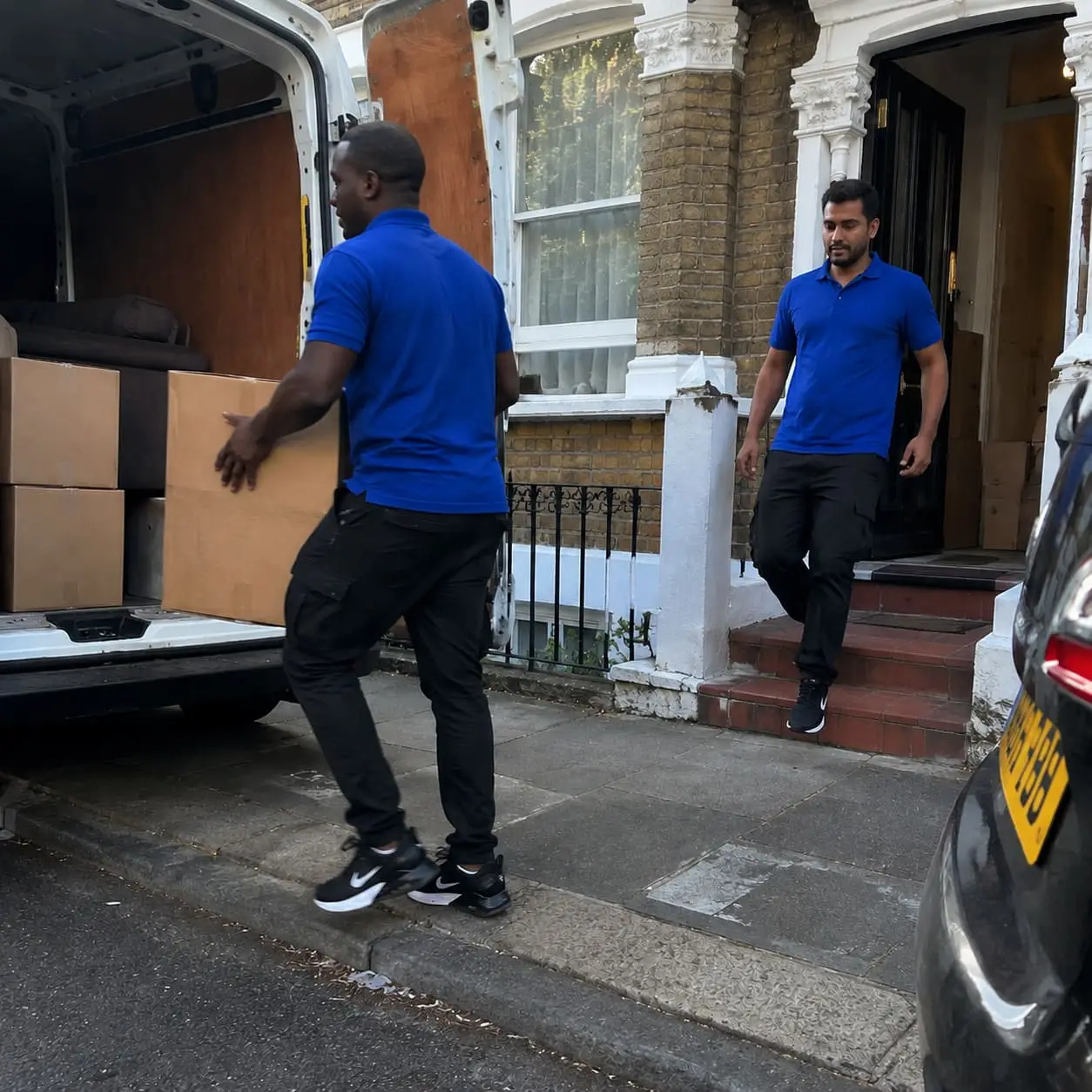
Photograph the bay, the nearest time plate, and any red line markings before the move, because those details can resolve disputes quickly if a vehicle blocks the space.

Costs And Notice
Parking suspension cost in London is local, date-sensitive, and tied to the number of spaces and days. No single London-wide price or notice period applies across every borough.
Kensington and Chelsea shows why current council pages matter. From 1 April 2026, its parking suspension fees are £82 per space per day for days 1 to 5, £123 per space per day for days 6 to 42, and £164 per space per day from day 43 onwards. Its express or short notice suspension fee for five working days’ notice is £408.
That example should not be used as a price for another borough. It simply shows how fees can be structured and how short-notice requests can cost more where they are offered. Old screenshots, forum posts, and dated removal blogs can lag behind council updates.
Earlier checking gives you better choices. If the closest bay cannot be suspended, you still have time to look at a nearby bay, a dispensation route, building access rules, or a different loading plan before the van arrives.
Moving Day Checks
The approved application is not the final parking check. On the day, the bay, sign, and dates still need to match the move.
- Find the yellow suspension notice. Kensington and Chelsea says an approved suspension uses a yellow warning notice on the nearest time plate, showing the bay location, dates, and reason.
- Check the exact bay. Confirm that the marked space on the street matches the approval, especially where several bays sit close together.
- Read the date and time. A correct street and wrong day will not help the removal van.
- Ignore informal space-saving. Cones, bins, notes, and barriers do not replace official permission.
- Use the council route if the bay is blocked. Where a vehicle is not authorised to park in a suspended bay, Kensington and Chelsea says it may be ticketed and removed.
Stay practical if another vehicle is in the space. Take a clear photo of the bay and the yellow notice, then use the relevant council parking route for the blocked suspension. The removal crew can work around many access problems, but a blocked bay is best handled through the authority that approved it.

We know London logistics, from parking suspensions to narrow access and ULEZ.
Speak to Our TeamChanging Council Rules
London parking suspension rules are a live part of move planning, not a saved note from the last time someone in the building moved. Borough fees can change, red route dispensations stay on a separate TfL path, and collection and delivery addresses may sit under different controls.
During the next 12 to 24 months, current council pages will matter more as boroughs keep updating fees, forms, and short-notice processes. The safer habit is simple: check the live authority for both kerbs, read the street signs as they stand, and treat van access as part of the move plan from the start.
Frequently asked questions
Do I always need a parking suspension for a removal van in London?
No. Some moves can use normal loading rules, but larger moves, flats, long carries, and controlled bays often need a suspension or dispensation.
Can a removal van park on single yellow lines in London?
London Councils says loading may be allowed on single and double yellow lines for up to 40 minutes where loading is observed, provided there is no loading ban and the vehicle is not causing an obstruction. Street signs still need checking at the exact location.
Who applies for the parking suspension, me or the removal team?
Either may handle it, but the responsibility should be agreed early. The person applying needs the exact bay location, dates, reason, and any vehicle details requested by the council.
What if my flat is on a red route?
A red route may need a TfL red route dispensation, not a borough parking suspension. Transport for London handles these requests separately from local borough councils.
Can I reserve a space with cones or bins for moving day?
No official parking space is reserved by cones, bins, notes, or barriers. Use the council suspension process, a dispensation, or the correct TfL route where formal permission is needed.