
What access problems cause the biggest delays on London moves?
The biggest London move access problems are parking, red routes, narrow streets, stairs, and building rules around lifts or bulky furniture. Each one affects how close the van can get, how long loading takes, and how many people or tools the removal team needs.
The parking problem outside the property
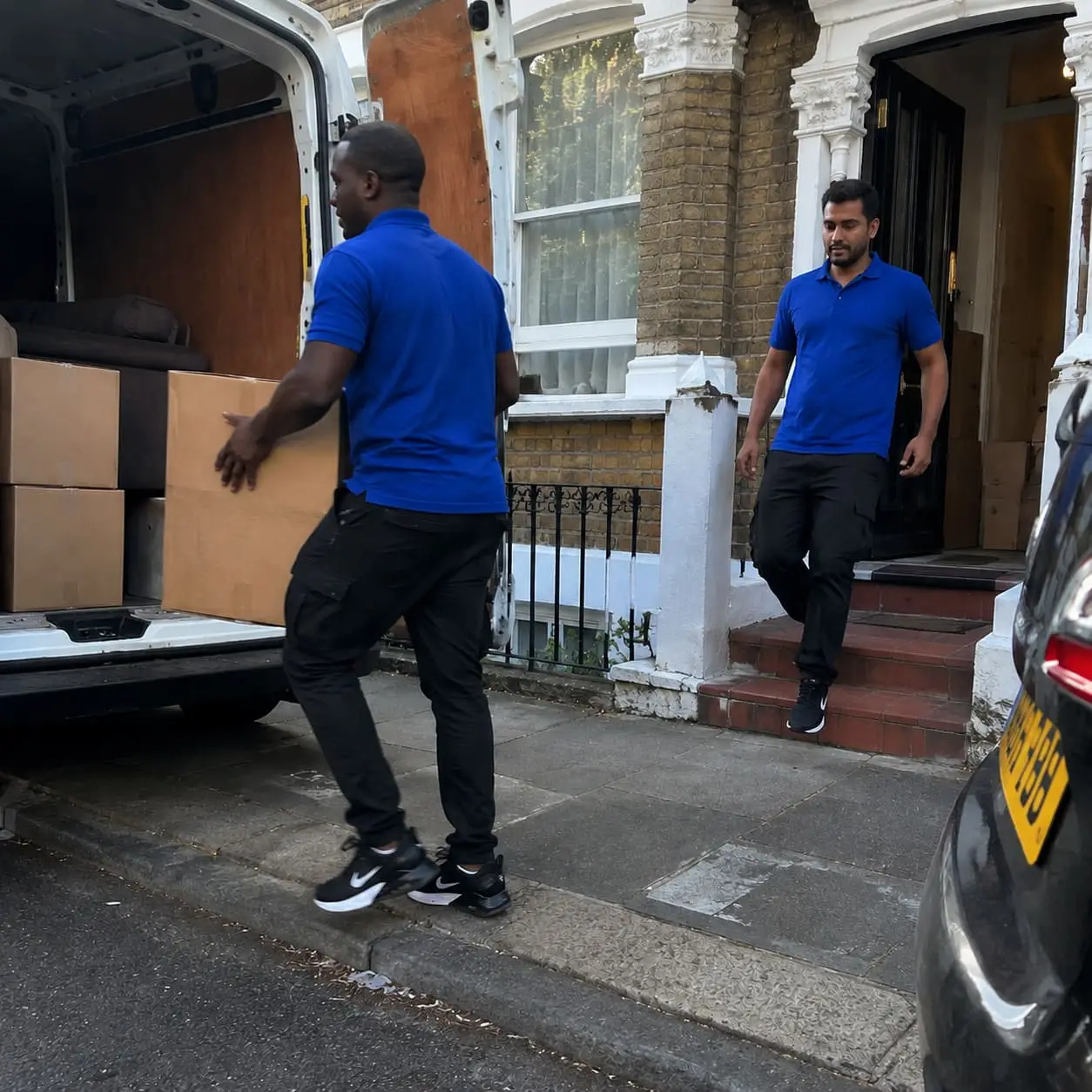
Picture the van reaching your street on time, then circling because the nearest usable space is halfway down the road. Nothing has gone wrong with the drive across London, yet the move has already slowed down. On many London removals, the awkward part is the last 20 metres between the van and the front door.
Parking for a removal van in London is really about three things: the van to door distance, the legal stopping time, and whether the van can sit there without causing an obstruction. A close space can save a huge amount of carrying time. A poor space can turn every box, wardrobe and appliance into a longer walk.
London Councils says loading and unloading is allowed on single yellow lines and double yellow lines for up to 40 minutes where loading is allowed, provided loading is observed and the vehicle is not causing an obstruction. In parking bays, loading and unloading is allowed for up to 20 minutes during controlled hours, but not in a suspended parking bay unless that suspension was requested for loading or a move.
Several parking options may work, depending on the street and the move:
- Legal loading: Suitable where the rules allow it and the loading time is short enough.
- Private driveway: Useful when the van can load safely without blocking access.
- Loading bay: Often helpful near flats, estates and high streets, if the signs permit use.
- Building loading area: Common in managed blocks, but it may need booking.
- Parking bay suspension: A safer option for larger moves, long carries or busy streets.
A London removals parking suspension is not needed for every move. It becomes useful when the move depends on having kerbside access for several hours, or when a controlled parking zone leaves no reliable space nearby. Cones, bins and handwritten notes might warn neighbours, but they do not legally reserve a bay.
Borough rules vary, so local detail matters. Westminster City Council, for example, allows parking bay suspensions for a house or office move, requires 10 working days’ notice, and treats one unmarked parking space as five metres. Another London borough council may use different notice periods, fees or application rules.
Share parking access before the quote is fixed. If the van cannot stop close to the door, the job may need a different crew plan, more carrying time, or a parking suspension arranged in advance.
An employed team, published pricing, and full insurance on every job, from a single item to a full house.
Get a Free QuoteThe red route and loading restriction problem
A street can look perfect for stopping and still be unusable for removals. Red routes, high streets and timed loading windows can turn an easy-looking address into a much tighter plan.
Red routes are different from normal borough-controlled streets. London Councils says vehicles cannot stop to load or unload on a red line during its operational times, and red routes use marked red loading boxes where loading may be allowed at signed times. Double red lines apply all day, and most single red lines apply between 7am and 7pm, but the sign on the street controls the real loading window.
That matters on central London moving access. A high street flat might have space outside at first glance, but a loading restriction can force the van to use a side street, a loading bay, or a timed red loading box. The wrong stopping place can mean a Penalty Charge Notice or the crew being moved on before the van is loaded.
Good planning changes the method. The move may need an earlier start, a smaller vehicle, a loading bay plan, or a different carrying route from the legal stopping point. Guesswork is risky because the sign outside the property always beats what the street appeared to offer from a map.
Central London moves may also involve the Congestion Charge zone. Transport for London states that, from 2 January 2026, the daily charge is £18 if paid on the day and £21 if paid within three days. TfL also lists operating hours as 07:00 to 18:00 Monday to Friday, and 12:00 to 18:00 on Saturdays, Sundays and bank holidays.

Measure the narrowest part of the route before move day, including doors, landings, lift interiors and stair turns. Those measurements often decide whether a wardrobe, sofa or table needs dismantling.

The narrow street and long carry problem
Some London homes are easy to reach on foot but awkward for a removal van. Mews streets, estate entrances, converted houses and basement flats can all create a long carry before anyone reaches the front door.
A Luton van with a tail lift needs space to approach, turn and load safely. Parked cars, tight corners and narrow road mouths can make the nearest legal stopping point less useful than it looks. In those cases, the issue is not the postcode. The issue is the carrying route.
Long carry removals change the work. Every item takes longer to move, heavier pieces tire the crew sooner, and the loading sequence needs more thought. Sofas, wardrobes and appliances cannot simply be carried in any order when the route includes gates, steps, low walls or a basement turn.
Workarounds depend on the street. A smaller van may get closer, then complete the move in shuttle runs. Extra crew can keep the carrying rhythm steady. A different loading point may reduce awkward turns, even if it is not directly outside the address. Earlier arrival can also help where parked cars build up during the day.
GT Removals uses video surveys through WhatsApp, Zoom or FaceTime where access needs a closer look before quoting. Seeing the street, entrance and carrying route can change the vehicle choice, crew plan and time allowance before move day. That is far better than finding out once the van is already loaded.
The stairs, no lift and upper-floor flat problem
Stairs rarely make a London flat move unmanageable, but they do change the job. Time, safe lifting, tight turns and crew size all matter once everything has to move through a communal staircase.
A first-floor flat with wide stairs is very different from several flights in a converted house. Mansion blocks can have long corridors and half-landings. Split-level flats may have awkward internal stairs after the crew has already reached the front door. Upper-floor flat access affects the pace of the day because people, not machines, do much of the work.
Heavy furniture downstairs is often harder than people expect. A large item has to be lifted, turned, paused, protected, and sometimes angled through a landing with little space. Fatigue also matters because tired lifting is slower and less safe. The crew may need more people, stair protection, a stair-climbing trolley for suitable items, or extra time in the schedule.
Building care sits alongside item care. Communal walls, banisters, floors and door frames may need protection, especially in shared blocks where neighbours and building management will notice scuffs straight away. A careful pace can be faster overall than rushing the first few flights and losing control at a tight turn.
GT Removals sends its own employed, trained team on every job, which matters on stair-heavy moves because lifting method and communication affect both safety and speed. Stairs can affect price or timing because they affect labour, access and equipment. They are ordinary in London, but they should never be treated as a small detail.
Check the street sign and building rules together, because a legal stopping point outside the property can still fail if the loading window, bay restriction or concierge rules do not match the move time.

The lift, building rules and bulky furniture problem
Managed buildings can slow a move before the first box leaves the flat. A lift may be in use, a concierge may allow removals only during a set window, or the service lift key may be with building staff.
Lift access is about permission as much as mechanics. Some blocks need a booked lift slot, lift blankets, goods lift access, loading bay coordination, or approval from building management. Small offices face the same issue when desks, IT equipment and filing units need moving through shared reception areas.
Timing becomes tight when the building controls the move window. If the crew arrives without the right lift booking, the van may wait outside while another resident uses the lift. If the loading bay is occupied, the carrying route may lengthen. If the concierge rules are missed, neighbour complaints can start before the move properly begins.
Bulky furniture adds another layer. A sofa that fitted during delivery may have been assembled inside the room. A wardrobe may need dismantling and reassembly. A table may pass through the front door but fail at the stair turn. Measuring the doorway, lift, corridor and tightest corner is often more useful than guessing from the size of the room.
A move run on hope leaves the hardest decisions until the corridor is full and the clock is moving. A move planned around the last 20 metres treats lifts, doors, furniture and loading points as part of the job from the start. The second approach usually works out better long-term because it protects the building, the belongings and the day’s timing before pressure builds.

Call, fill in the form, or send a few photos on WhatsApp and most quotes come back within a few hours.
Get a Free QuoteFrequently asked questions
Can a removal van park outside my house in London?
A removal van can park or load outside your house only if the street rules allow it and the vehicle is not causing an obstruction. The best option may be legal loading, a parking bay suspension, a driveway, a loading bay, or a building loading area.
Do I always need a parking suspension for a London move?
You do not always need a parking suspension. Smaller moves may work with legal loading or private access, but larger moves, long carries and busy controlled parking zones often benefit from a suspended bay.
Can a removal van load on a red route in London?
A removal van cannot load on a red line during its operational times unless the signed rules allow loading in a marked red loading box. Always use the street sign as the final guide because red route loading windows vary.
What happens if my flat has no lift?
A flat with no lift can still be moved, but the team needs to plan for stairs, turns, crew size, time and safe lifting. Several flights, narrow landings and heavy furniture can affect the schedule and the labour needed.
Do I need to book the lift for removals?
Many managed blocks require a lift booking, service lift access, concierge approval, or a set move window. Asking building management early helps avoid waiting time, complaints and blocked access on move day.