
Why is a video survey about more than showing the furniture?
A removals video survey should show the job as the crew will meet it: belongings, hidden storage, awkward items, access, parking, and any rules that affect loading. The best camera tour follows the route from cupboard to van because that is what shapes the quote, team, vehicle, and timings.
A tidy sweep of the main rooms can still miss the details that change a move. Sofas and beds matter, but so do the boxes above the wardrobe, the narrow landing outside the bedroom, and the place where the van can legally stop.
A video survey for house removals works as an inventory check and a planning check at the same time. The survey gives the removals team a view of volume, item type, packing time, access, specialist handling, crew size, and van allocation. Current removals survey guidance also treats loft contents, garage storage, appliances, and access challenges as part of the quote, rather than side details.
GT Removals uses video surveys by WhatsApp, Zoom, or FaceTime to turn that picture into a fixed written quote based on the agreed scope of move. The camera call also gives the team a chance to spot anything that could slow the job down on moving day before the crew is stood in the hallway trying to solve it under time pressure.
Nobody is marking the state of your home. Half-packed rooms, full cupboards, children’s toys, and normal clutter are part of moving house. The useful question is simple: would this detail affect how long the move takes, what vehicle arrives, or how safely the item can be carried?
What hidden storage do customers most often forget to show?
Hidden storage often changes the size of a move more than the furniture in plain sight. A room can look nearly empty on camera and still contain many boxed, loose, or awkward items behind doors.
You do not need to open every drawer or show personal belongings in detail. The aim is to show the existence and rough amount of stored items, so the quote covers the real volume.
- Inside the home: airing cupboards, kitchen cupboards, wardrobes, under-bed storage, toy boxes, coat cupboards, and items stored above cabinets.
- Outside the home: loft spaces, garage storage, sheds, garden furniture, garden boxes, balcony boxes, plant pots, tools, ladders, and DIY materials.
- Shared or overlooked areas: bike stores, cage storage, basement cupboards, concierge-held storage, and anything kept in a communal area of a London flat.
Lofts and garages deserve a proper camera view because they often hold items that are dusty, loose, heavy, or awkward to pack. A few forgotten storage zones can mean more boxes, more carrying time, and a different van plan. If something may be thrown away before moving day, say so during the call rather than leaving the surveyor to guess.
Can the item actually leave the property safely?
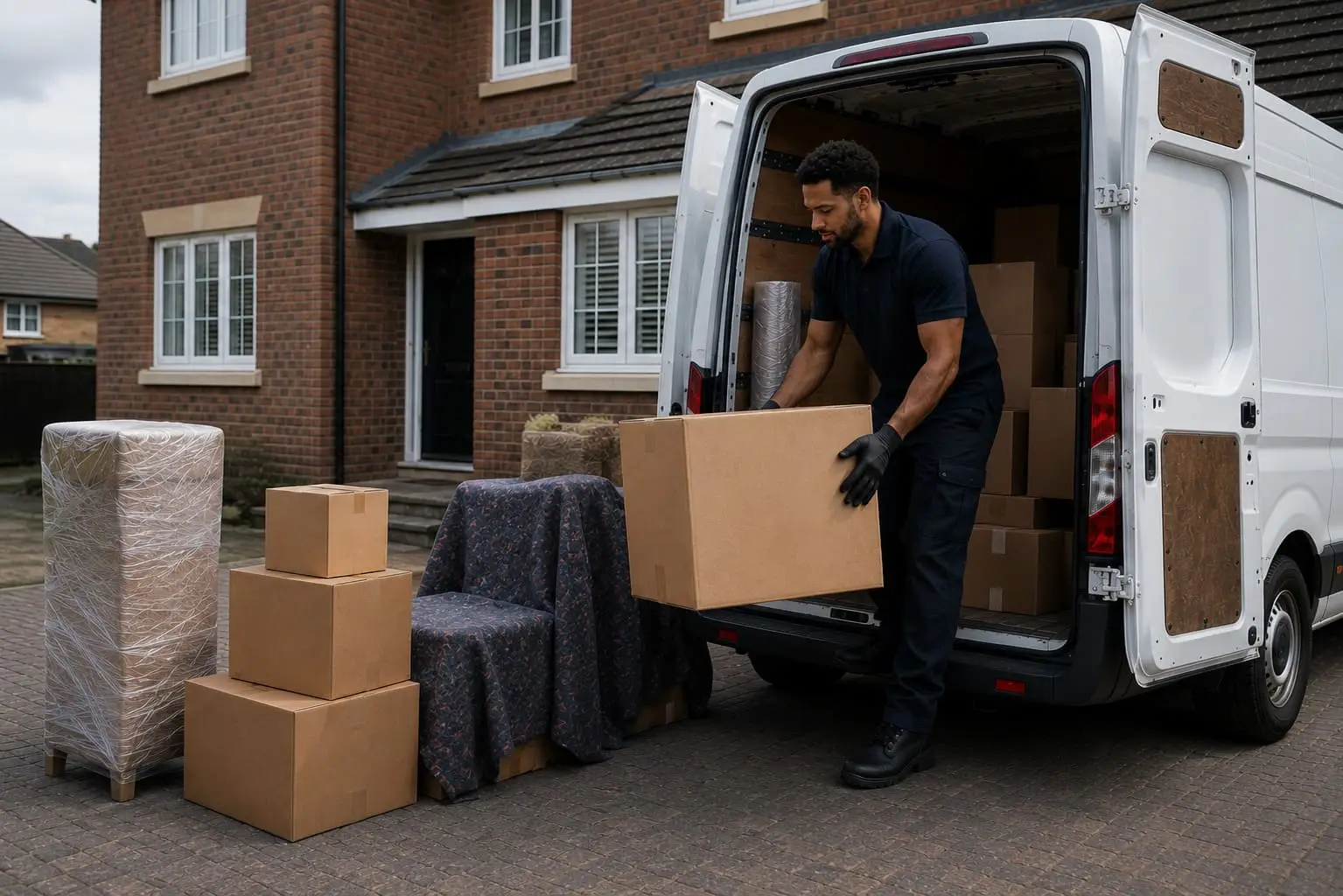
Seeing a large item on camera does not prove that it can get out of the property. The survey also needs to show the route out, the turns, the door clearance, and whether dismantling or specialist packing may be needed.
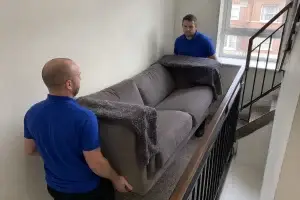
A sofa is a good example. Pointing the camera at the sofa tells the team it exists. Pointing the camera from the sofa to the doorway, then along the hallway and down the stairs, tells the team whether it can turn, lift, and travel without scraping walls or getting stuck.
The same logic applies to wardrobes, American-style fridge freezers, pianos, exercise bikes, large desks, bed frames, mirrors, artwork, fragile glass, and flat pack furniture. Some items may need dismantling. Others may need extra wrapping, a particular carrying angle, or more people on the lift.
During a large items removals video survey, point the camera at four things in order: the item, the nearest exit from the room, the first tight turn, and any screws, joins, legs, doors, or panels that may need removal. That short sequence gives far more useful information than a long, shaky shot from the other side of the room.
GT Removals carries £30,000 goods in transit insurance and £5 million public liability insurance on every job, but insurance is not a replacement for good planning. The better approach is to flag fragile, heavy, awkward, or high-value items early, so the move plan protects the item and the building from the start.
An employed team, published pricing, and full insurance on every job, from a single item to a full house.
Get a Free QuoteDo movers need to see the stairs, doors, corridors, and lift?
Movers need to see the full access route because the route can be harder than the room. Stairs, lifts, corridors, landings, low ceilings, and doorway turns all affect timing, crew planning, and safe handling.
Start inside the room where the larger items sit. Show the doorway from inside and outside, then move into the hallway slowly enough for the team to see the width and any sharp turns. A tight turn outside a bedroom can matter more than the bedroom itself.
Next, show the stairs or lift. For stairs, the team is looking at width, landing space, bends, banisters, low ceilings, and how far items must be carried. For lifts, the useful view includes the lift door, the inside space, the route to the lift, and any steps before or after it. A lift that works for people may still be poor for long furniture.
Flats and managed blocks need a wider view. Show communal corridors, service entrances, loading bays, gate entry points, and any concierge desk or building management route. If a lift booking, service entrance, or time window applies, mention it during the survey. Public liability insurance matters in these shared spaces because walls, lifts, doors, and communal areas are part of the risk picture.
Access does not need to be perfect. The crew simply needs to know what kind of access they are planning for before the first box is lifted.
Show the camera route from the item to the exit, then to the van position if possible. That sequence gives the mover a clearer view of carrying distance, turns, and loading difficulty.

Why do parking, loading distance, and building rules matter so much in London?
London moves can be delayed before the first item leaves the home if the van cannot stop where the customer expected. The street outside, the route from door to van, and the building rules can affect the move as much as the furniture.
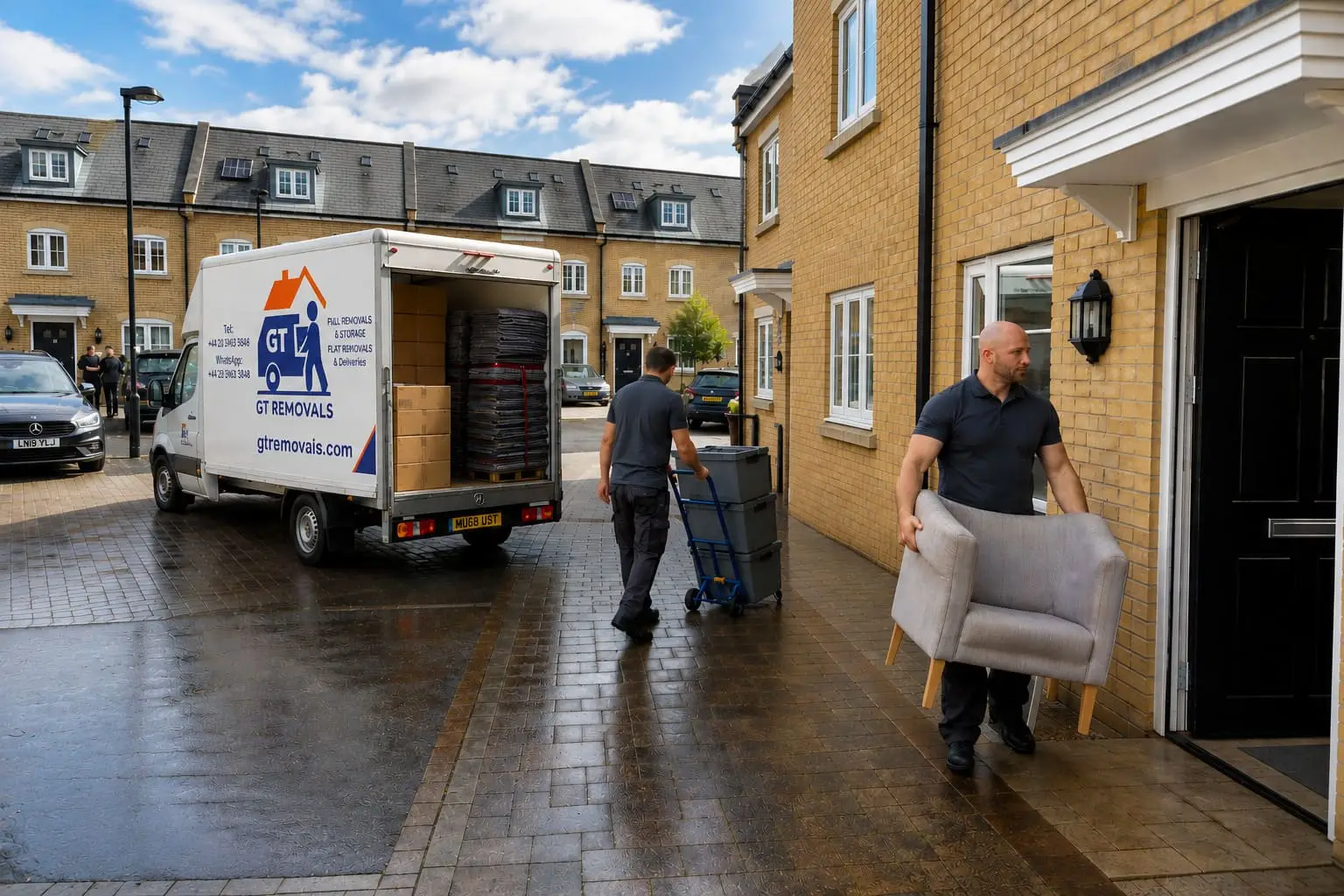
Show the street from the front door if you can. The team needs to see controlled bays, yellow lines, red routes, loading areas, gates, estate access, and how far the van may be from the entrance. A short legal loading distance and a long carry through a courtyard are two very different jobs.
Council rules and building rules are separate. A borough may control parking bays and loading restrictions, while a building manager or concierge may control service lifts, loading bays, entry times, and service doors. Westminster City Council, for instance, lists a removal van for a house or office move as a reason to apply for a parking bay suspension. Westminster also says loading and unloading must be continuous, or a Penalty Charge Notice may be issued. Other boroughs set their own rules, so the local council matters.
Central London can add another layer. Transport for London says the Congestion Charge rose to £18 from 2 January 2026 if paid on the day of travel or in advance. TfL lists charging times as 07:00 to 18:00 Monday to Friday, and 12:00 to 18:00 on Saturdays, Sundays, and bank holidays, with no charge from Christmas Day to the New Year’s Day bank holiday inclusive.
A removals video survey is not the place to become a parking expert. It is the place to show the van position, the loading route, and any building restrictions clearly enough for the quote and plan to reflect London conditions.
Mention lofts, garages, and communal storage even when they look minor on screen. These spaces often add the most time and boxes to the final move plan.

What happens if something changes after the video survey?
A video survey improves quote accuracy, but the quote is still based on the job shown and agreed at the time. If the scope changes later, the plan may need to change too.
Scope change simply means the move is no longer the same job. Added boxes, extra furniture, unfinished packing, a new storage unit, a fresh dismantling request, or a lift rule from building management can all affect time and labour. Forgetting a small lamp is one thing. Finding a full loft after the quote is another.
Written quotes should be read with the scope in mind. Check what has been included for packing, dismantling, parking, waiting time, access, storage, and any known restrictions. Removal firms do not all treat these items in the same way, so the written detail matters more than a casual verbal assumption.
The safest habit is to update the mover as soon as something changes. A change mentioned early can often be planned into the job. A change revealed after the van arrives usually costs time first, then money.
What should you check just before the video survey starts?
You do not need a perfect home or a polished script before a pre move video survey. You need a charged phone, a clear signal, enough light, and access to the places that usually get forgotten.
Use this house move video survey checklist before the call begins:
- Charge your phone and stay near a steady Wi-Fi signal where possible.
- Turn lights on in darker rooms, cupboards, lofts, garages, and shared storage areas.
- Have keys ready for sheds, garages, balcony boxes, storage cages, and any locked rooms.
- Know which items are staying, going, being sold, or being added later.
- Have building details to hand, including lift bookings, concierge rules, service entrances, and loading times.
- Be ready to show the street, likely van position, parking bays, loading route, and distance from entrance to van.
- Mention packing decisions, dismantling needs, fragile items, and anything you are unsure about.
Once you know what movers are looking for, the video survey feels less awkward. The camera route becomes clear: contents, hidden storage, awkward items, access, parking, building rules, and changes. Instead of wondering whether your cupboards look messy, you know which doors to open, which corners to show, and which details could alter the plan for moving day.
Call, fill in the form, or send a few photos on WhatsApp and most quotes come back within a few hours.
Get a Free QuoteFrequently asked questions
Do I need to show inside cupboards during a removals video survey?
You should show cupboards enough for the mover to judge the rough volume, but you do not need to display private items in detail. A quick camera view of shelves, bags, boxes, and stored items is usually enough.
Do movers need to see the loft?
Movers should see the loft if anything in it is moving. Loft contents can affect box count, packing time, carrying time, and van space, especially if items are loose, dusty, heavy, or hard to access.
How long does a removals video survey take?
A removals video survey usually takes as long as needed to show the home, storage areas, awkward items, access route, and parking. A small flat may be quicker than a house with a loft, garage, garden, and managed building rules.
Can a removals quote change after a video survey?
A quote can change if the job changes after the survey. Added items, extra packing, new dismantling needs, changed access, or new building restrictions can alter the time, labour, or vehicle plan.
Should I show parking during a moving video survey?
You should show parking because the van position affects loading time and planning. In London, controlled bays, loading rules, red routes, estate access, and building restrictions can all matter on moving day.