
Why do we send three people on most London moves?
A three-person team is useful on many London moves because the third mover changes the workflow. Two movers can carry while the third prepares furniture, protects access, manages the van and keeps loading steady. Smaller, simpler moves may still suit two people, so crew size should match access, volume and risk.
Start with the real mistake in comparing two removal quotes
You have two removal quotes open on your phone. One shows a two-person removal team. Another shows a three-person removal team. At first glance, the second one can look like the same job with an extra hourly rate added on.
That comparison misses the part of the move that the quote does not show. Crew size affects how the job runs, and it is not just about how many people lift. On many London removals, the third person keeps the move flowing while two others carry items through the property, stairs or shared entrance.
GT Removals plans most London moves around the whole route: the van position, the stairs, the lift, the loading order, bulky furniture, access rules and likely fatigue. A small, simple move may suit two people perfectly well. A larger or awkward move can slow down if every task has to stop whenever both movers are carrying.
So the better question is direct: what job is the third person doing? If the answer is vague, suspicion is fair. If the answer links to access, wrapping, loading, dismantling, timing and safety, the higher crew size may be a practical planning choice.
Separate small moves from moves that need a bigger crew
Two people can be enough for many smaller London moves. A lightly furnished one-bedroom flat with lift access, easy parking and a short carry may work well with a two-person team, especially if furniture is limited and boxes are ready.
Room count alone can mislead you. A two-bedroom flat with a booked lift, a clear loading bay and furniture that fits through the doors may be simpler than a one-bedroom flat above a shop with a narrow stairwell and no place for the van outside. The move with fewer rooms can still take more labour if the access is awkward.
Furniture changes the answer too. A wardrobe that needs dismantling, a sofa that twists on a stair turn, or a heavy table that needs careful control can make a small move feel much bigger at the doorway. A removal survey or video survey should pick up those details before the crew plan is set.
London properties add many grey areas. Building management may set a lift booking. Controlled parking zones can push the van further away. London borough parking suspensions may be needed where a loading bay is shared or restricted. In those cases, the difference between two or three movers often comes from the route, not the number of bedrooms.
An employed team, published pricing, and full insurance on every job, from a single item to a full house.
Get a Free QuoteFollow what the third person actually does during the move
A third mover usually adds value by keeping separate tasks running at the same time. Speed comes from continuity, not rushing.
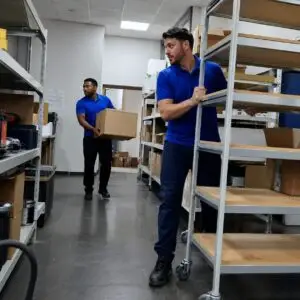
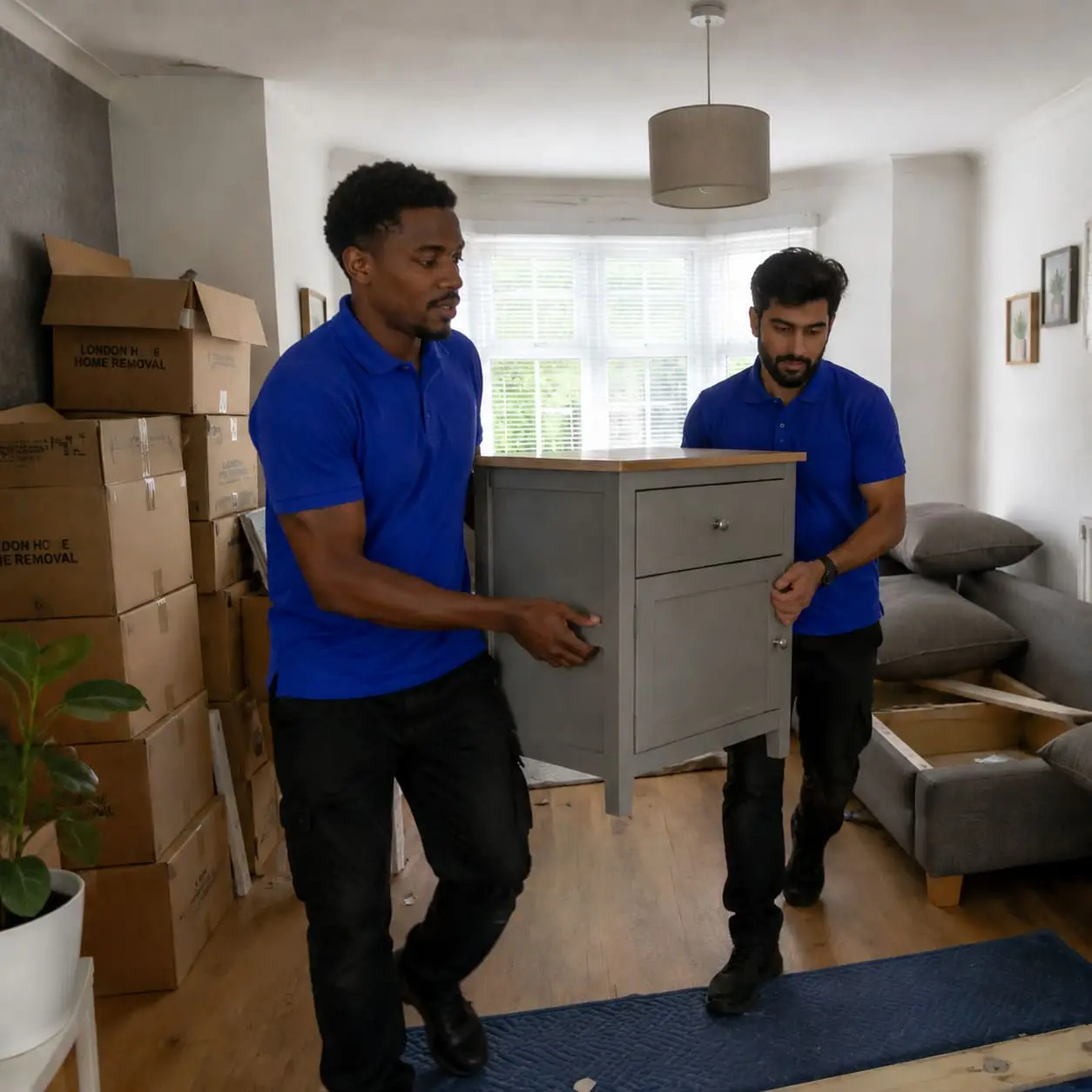
Inside the property, two movers may be carrying boxes, chairs or furniture through the hall while another person prepares the next item. That can mean wrapping a cabinet, taking legs off a table, checking that a doorway is clear, or protecting a floor before the next carry begins. Without that extra role, both movers may have to stop carrying every time a new item needs work.
At the stairwell or lift, the third person can manage the flow. Someone may need to hold doors, watch corners, speak with building staff, or keep the lift use inside the agreed window. In a shared London block, a small pause at each stage can soon become a pattern.
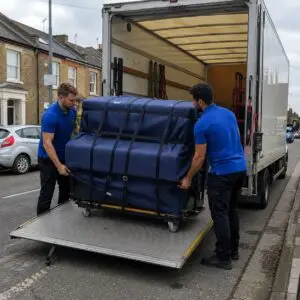
Van loading is a skilled part of the job too. Removal blankets, straps, fragile items, load balance and loading order all matter. A van packed in the wrong order can create extra handling at the delivery address, especially when beds, sofas and boxes need to come off in a certain sequence.
Our team often splits roles so two people move items from the property while one person controls the van and prepares the next stage. That only works when the crew knows how to communicate and swap roles without confusion. Three people standing in the same hallway achieve little; three people with defined jobs can remove bottlenecks.
Insurance also belongs in this conversation. Goods in transit insurance covers belongings while they are on the van during transport, and public liability insurance relates to property damage or injury to third parties. Those policies matter, but careful wrapping, controlled carrying and sound loading are still the practical steps that reduce avoidable problems during the move.
Compare removal quotes by asking what each mover will do during wrapping, loading and route control. A clear role plan is often more useful than a lower hourly rate.

Check how stairs, bulky furniture and fatigue change the risk
UK manual handling law does not set a fixed maximum legal lifting weight. The Health and Safety Executive says the weight of a load matters, but safe handling depends on the task, the load, the working environment and the people doing the work.
That point matters in removals because furniture is often awkward before it is heavy. A chest of drawers, mattress or sofa can block vision, twist the body, or force an uneven grip. HSE guidance linked to the Manual Handling Operations Regulations 1992 says bulky or unwieldy loads can increase injury risk even if they are not especially heavy. It also notes that risk is likely to rise if any dimension exceeds about 75 cm.
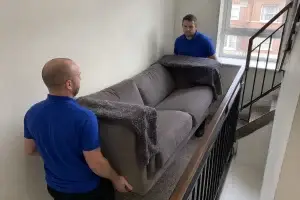
Stairs make team handling harder than it looks. HSE guidance says steps, slopes and uneven ground can change how weight is shared between people during a team lift. On a staircase, one mover may carry more of the load at certain angles. A third person may help manage doors, corners or route control, even when only two people are directly holding the item at a given moment.
Fatigue is the quiet part of the quote. A two-person team may start strongly, yet repeated stair carries, long walks from the van and awkward postures can affect handling later in the day. HSE estimated that 511,000 workers suffered from work-related musculoskeletal disorders in 2024/25, causing an estimated 7.1 million working days lost. Manual handling, tiring positions and repeated action sit squarely in that risk picture.
Team handling only helps when roles are set. The Health and Safety Executive says it can reduce risk to one handler, but it needs planning, coordination, clear roles and communication. For removals, that means someone calls the turns, someone watches the route, and nobody guesses their way down a staircase with a wardrobe.

Factor in the London pressures that make three people more useful
London moves often become three-person jobs because of the street and building, not because the home is huge. Time can disappear before the first large item reaches the van.
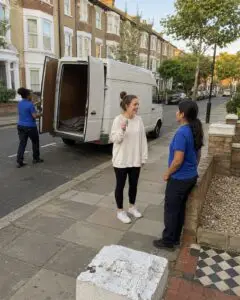
Outside the property, parking sets the pace. A van may need to sit in a controlled parking zone, a suspended bay, a loading bay or a spot that is less convenient than the customer hoped. If the carry from front door to van is long, two movers can spend the day walking back and forth while preparation and loading wait.
Shared buildings add another layer. A flat above a shop may have a tight stairwell and a busy pavement below. A mansion block may have a lift booking window and building management rules. A central London address may bring red routes, limited stopping places and pressure to keep the van position used well.
Transport costs can sit in the background too. Transport for London lists the Congestion Charge as £18 if paid in advance or on the day, and £21 if paid by midnight on the third day after travel. Charging hours apply on weekdays and also during set afternoon hours at weekends and bank holidays. ULEZ, the Ultra Low Emission Zone, is another London planning factor, although it affects vehicle compliance rather than how many people should carry your furniture.
A typical pressure point looks simple from the pavement: the lift is booked, the van cannot stay long, and a sofa needs to come down a narrow communal stairwell. In that situation, a third person can keep the van organised, the route clear and the next item ready while the carry team keeps moving.
If your building has lift booking windows or restricted parking, include those details in the quote request. Those access limits often decide whether two movers or three movers will work better.

Compare the extra person with the final cost, not just the hourly rate
Three movers usually cost more per hour than two movers, but the final bill depends on how the move is priced and how the day unfolds. A lower hourly rate can still cost more overall if the job takes much longer.
Hourly man and van bookings make the maths feel immediate. You see the rate, multiply by time, and compare. Yet time is affected by dismantling, waiting for lifts, stairs, long carries, loading delays, parking distance and access problems. If two people spend the day stopping and restarting, the lower rate may lose some of its advantage.
Fixed-price written quotes work differently. The crew plan should already be built into the figure, along with the known access and workload. At GT Removals, the point of scoping the move is to match the team to the job before moving day, so the quote is judged by the plan behind it as much as by the number of people named on it.
Three people will not always be better value. For a small, ready-packed move with clear access, two movers may be the sensible option. For a move with stairs, bulky furniture, tight parking or timed building access, the extra person may reduce stop-start handling and make the day run in a more controlled way.
A useful removal quote should explain the thinking. If one quote lists two movers and another lists three, compare what each includes, how access has been assessed, whether dismantling is included, how loading will be handled, and whether waiting time or parking issues could alter the final cost.
Ask the better question before choosing between two and three movers
The real decision is whether the crew size fits the move in front of you. Two people can be right. Three people can be right. A poorly matched crew, in either direction, is where the problems begin.
Ask what each person will be doing during the move. One answer may involve carrying, wrapping, loading, access checks and van organisation. Another may reveal that the quote is simply a number with little planning behind it. The distinction matters because a removal quote is a working plan, and it is not just a price.
A good comparison looks beyond headcount. It reads the property, the route, the building rules, the furniture and the time pressure, then sets a crew that can handle those conditions without turning the day into a series of avoidable pauses. The sharper question is why three people are coming, and whether the move has been thought through well enough for the number to make sense.
Call, fill in the form, or send a few photos on WhatsApp and most quotes come back within a few hours.
Get a Free QuoteFrequently asked questions
Do I need two or three movers for a London flat?
A simple flat with lift access, easy parking and limited furniture may only need two movers. A flat with stairs, a long carry, bulky furniture or tight building rules may suit three.
Will three movers always finish faster than two?
Three movers can finish faster when the third person has a clear role in wrapping, loading, route control or van management. Extra headcount alone does not help if the move is poorly organised.
Is a three-person removal team always better value?
A three-person team is not always better value. The final cost depends on the hourly rate, total working time, access, waiting, stairs, loading and whether the quote is fixed or hourly.
Why has my removal firm quoted for three people?
A firm may quote for three people because the move has access pressure, heavy or awkward items, stairs, dismantling work, a tight lift booking or a long carry to the van. The quote should explain that reasoning in plain terms.
How should I compare a two-person quote with a three-person quote?
Compare the plan, not only the headline price. Ask what each mover will do, how access has been assessed, what is included, and whether delays such as parking or lift restrictions could affect the final bill.