How can you tell if a removal company is legit before you book?
We treat a legit removal company as one that proves the same basics before you pay: its business identity, written quote, insurance, moving-day team and payment trail all line up. Reviews and polished adverts help, but matching paperwork is what tells you who is accountable for your move.

Quick answer: a legit mover proves the basics fast
No single check proves a mover is legitimate. We look for matching proof, because gaps between a quote name, a payment name and the crew on the day are where most trust problems begin.
Use this order before you confirm a date or pay a deposit:
- The business identity should match across the website, quote, email address, invoice and payment name.
- A written quote should say what the job includes, what might cost extra and what happens if access or timing changes.
- Insurance proof should name the cover, not just say “fully insured” in a message.
- Your moving-day team should be explained before the booking is confirmed, especially if you booked through a platform or man and van advert.
- Payment should leave a record, such as an invoice, receipt or bank transfer reference linked to the same business.
Below, we show how to read each proof point properly, because some signs look reassuring without telling you much.
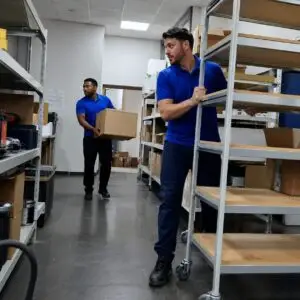
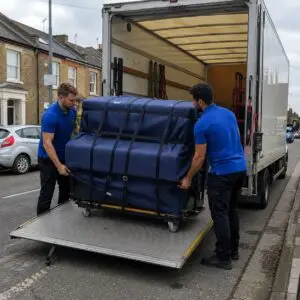
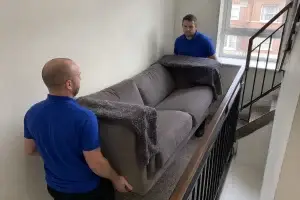
An employed team, published pricing, and full insurance on every job, from a single item to a full house.
Get a Free QuoteCompanies House proves existence, not trust
Companies House is a useful starting point, but it does not prove that a removals business will do a careful job or send the right team. We use it to check identity, then we still look at the quote, insurance and booking trail.
On the Find and update company information service, you can search by company name, company number or officer name. You can also view company data, look at document images and use the disqualified directors search. Those checks help you compare the registered details with the name on the quote, the website, the email footer and the payment account.
One limit matters. Companies House states that it does not check the accuracy of the information filed. A listing confirms that something has been filed, but it does not prove the mover’s insurance, equipment, staff or conduct on moving day.
A mismatch is worth asking about calmly. Trading names, payment names and registered names can differ, especially with small businesses, but the mover should be able to explain the link in plain words before you pay. If the answer changes each time you ask, the paper trail is already too thin.

Ask for the exact business name that will appear on the invoice and the payment reference. If those details do not match the quote, ask for the link in writing before you pay.

A vague quote is where problems start
Two removals quotes can look close at first glance. One says “two men and a van, Saturday morning,” and the other states the addresses, access, inventory, packing, parking, waiting time, insurance and payment terms. We would take the second one more seriously, even if the headline price is higher.
The quote needs the real moving-day scope
A proper written quote is proof that the mover has thought about the job. It should cover the actual move, not a rough slot with a van attached to it.
For a London move, we want the practical details in writing where they apply. Parking can decide whether the van sits outside your door or halfway down the road. Building management rules can affect lifts, loading bays and permitted hours. The Congestion Charge zone and the Ultra Low Emission Zone, or ULEZ, can also affect how the move is planned.
Access matters as much as distance. A top-floor flat with no lift is a different job from a ground-floor flat with a loading bay, even if both moves use the same van. Packing, dismantling and reassembly should be named too, because “we assumed that was included” is a poor sentence to hear on moving day.
At GT Removals, we use published pricing and fixed written quotes, so the price has a clear basis before the van is booked. That is the standard we would tell you to look for anywhere: a quote you can read, compare and hold against the booking.
Insurance proof needs named details
Goods in transit insurance covers belongings while they are being transported. Public liability insurance covers damage to property or injury to other people during the move. Those two phrases matter, but the proof matters more than the wording.
Ask for the policy name, type of cover, expiry date, exclusions and excess. Customer-packed items also need attention, because some cover can treat them differently from items packed by the mover. A short message saying “yes, insured” is too vague for a move involving your furniture, boxes and keys.
Our jobs include £30,000 goods in transit insurance and £5 million public liability insurance. Whatever mover you choose, the cover should be easy to name before booking, not something chased after something goes wrong.

The booking platform is not the team
You can book one name online and meet a different driver on moving day. That does not automatically mean the move is unsafe, but it does mean you need to know who is taking responsibility for your belongings.
Here is the practical difference between common booking routes.
| Booking route | What it means | Proof to ask for |
|---|---|---|
| Direct removals business | You deal with the same business that plans and carries out the move | Written quote, insurance details and confirmation of who attends |
| Marketplace or broker | The booking may be passed to another operator | Name of the actual mover and who handles problems on the day |
| Subcontracted driver model | A separate crew may carry out the work under another name | Written confirmation of responsibility, insurance and payment trail |
Reviews are useful when they show a pattern, especially recent feedback that names the team or explains how problems were handled. Star ratings alone do not tell you who will walk through the door.
At GT Removals, we send our own employed, trained team and do not subcontract the job to unknown drivers. Our Google reviews often name individual team members, including Steve and Abrham, which matters because the person being praised is part of the team doing the work.
A direct team gives you a shorter accountability chain. With any model, the basic question stays the same: will the business that quoted you also stand behind the work on moving day?
Compare two or three quotes on what is included, not only on price. A mover that names access, packing and timing in writing gives you a much clearer basis for booking.

A safe booking leaves a trail
A booking becomes safer as each detail leaves a record. The quote confirms the work, the payment terms confirm how money changes hands, the insurance proof confirms what cover applies and the team information confirms who is expected at your door.
Deposits are not automatically a problem. Trouble starts when the amount is vague, the payment name does not match the business, or you are pushed to pay cash with no receipt. A normal booking should give you something you can file and refer back to if plans change.
Reviews deserve a second look, too. We pay more attention to patterns than single glowing lines. Recent comments about timing, care, communication and issue handling say more than a polished advert.
For rubbish, unwanted furniture or bulky waste, another check applies. In England, householders have a waste duty of care, which means you need to take reasonable measures to make sure household waste goes only to an authorised person. If a private business takes it away, you should check that it has valid, up-to-date upper tier waste carrier registration, and the registration number starts with CBDU. You can check this on the Environment Agency public register using the registration number, business name or postcode.
Final red flags are usually simple. A quote that leaves out access, a payment request with no paperwork, a refusal to show insurance, or a sudden change in who is attending should make you pause. A very low quote is not proof of a bad mover, but a very low quote with missing details is a poor bet.
Before you book, prioritise traceability above price, because the mover you can identify, insure, quote and pay on paper is the mover you can hold to the job.

Call, fill in the form, or send a few photos on WhatsApp and most quotes come back within a few hours.
Get a Free QuoteQuestions we get asked before people book movers
Is it normal to pay a deposit to a removal company?
A deposit can be normal when it is linked to a written quote and a clear booking confirmation. You should be able to see who you paid, what the payment covers and what balance remains.
Does a very low removals quote mean a mover is unsafe?
A low quote is a warning sign only when it is vague, missing key details or far below other quotes for the same job. We would look at what is included before judging the price.
Do removal companies need to be registered in the UK?
A limited removals business can be checked on Companies House, but that listing does not prove service quality or insurance. Some small operators trade differently, so you still need a written quote, payment record and proof of cover.
Should I rely on reviews before booking a man and van service?
Reviews help, but they should sit alongside paperwork. Stronger proof includes a named business, a written quote, insurance details and a clear answer on who will turn up.
What should I ask if rubbish is being taken away with the move?
Ask for the waste carrier registration details before anything is removed. In England, the public register can be checked by registration number, business name or postcode.
This is general information, not professional advice.