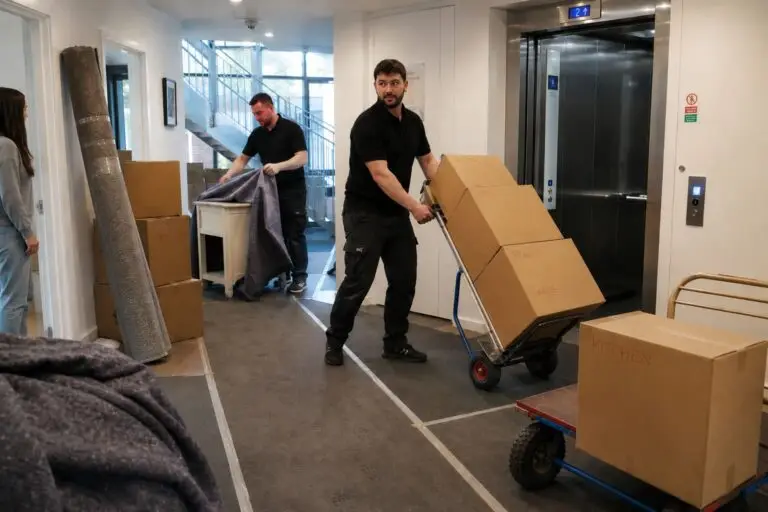
How many boxes do you need for your move?
Start with around 20 to 40 boxes for a 1 bedroom home, 40 to 60 for 2 bedrooms, and 70 to 100 for 3 bedrooms. Then adjust for full cupboards, wardrobes, books, a busy kitchen and storage you may forget. A realistic estimate matters more than a perfect count.
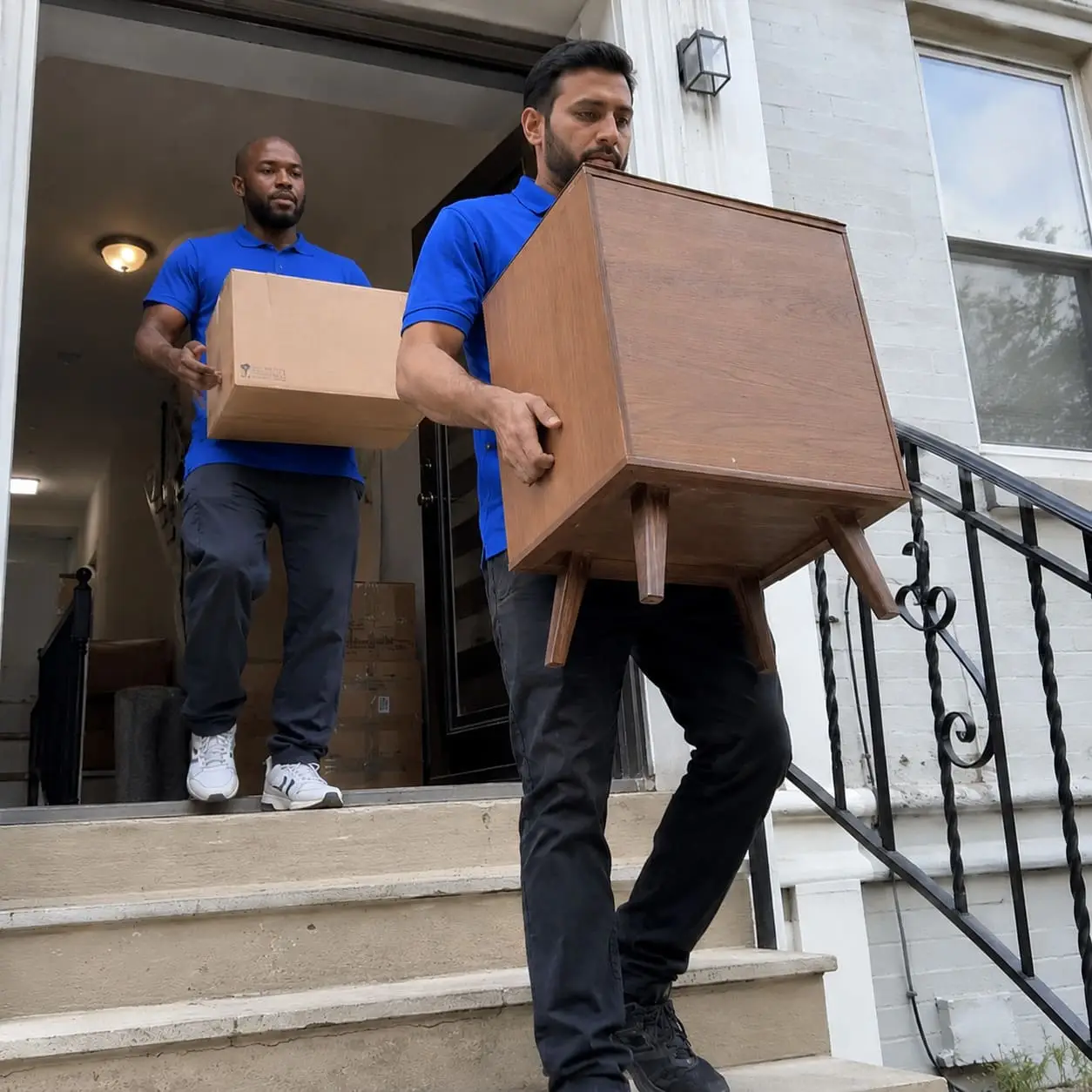
How many moving boxes should you start with?
Most people run short because the visible rooms look manageable. The sofa, bed and table are obvious. The kitchen cupboards, under-bed storage and last drawer of cables are where the box count grows.
Use your home size as the starting point, then adjust from there.
| Home size | Starting box range | What pushes it higher |
|---|---|---|
| 1 bedroom flat or house | 20 to 40 boxes | Full wardrobes, books, a full kitchen or packed cupboards |
| 2 bedroom house or flat | 40 to 60 boxes | Loft storage, shed storage, full wardrobes or a busy kitchen |
| 3 bedroom house | 70 to 100 boxes | Loft contents, garage items, children’s rooms or belongings built up over time |
Those ranges are working estimates, not fixed rules. Two 2 bedroom homes can have very different packing volume if one has a spare room with a desk and files, while the other has very little storage.
Your mover does not need a perfect box total, but a realistic moving box estimate helps plan van space, loading time and the team needed on the day. Use the range as your base, then walk through the home looking for anything the room count hides.
What should you add for cupboards, lofts and busy rooms?
After the range, the useful question is simple: where is the stuff hiding? A tidy room can still need a lot of boxes if drawers, cupboards and storage bags are full.
We look at the home in two parts. First come the rooms you use every day. Then come the storage spaces that do not show up properly when someone says “1 bedroom flat” or “3 bedroom house”.
Rooms you use every day
Kitchens catch people out. Plates, glasses, pans, small appliances, dry food and cleaning items spread quickly once you start packing them properly. A kitchen with full cupboards can add far more to a house move box count than the size of the room suggests.
Wardrobes have the same problem. Hanging clothes look simple until you add shoes, bags, spare bedding and folded clothes from drawers. Children’s rooms also need a careful look because toys, books and clothes rarely fit neatly into a quick room count.
Home offices deserve their own check. Files, books, monitors, leads and stationery can turn one “small room” into a heavy packing job. If you work from home, treat that space as more than a desk and chair.
Storage you forget
Lofts, sheds, garages and under-bed storage change the estimate because they hold belongings you do not see every day. They also take longer to sort because many items need a decision before they go into a box.
Long-term storage is where last-minute shortages start. You open a cupboard expecting spare towels and find tools, photo frames, cables and paperwork. That is why we always suggest walking through storage areas before you buy the final batch of moving boxes.
Decluttering helps, but it has to happen before the packing count is set. If you leave it until the night before, the unwanted items still take up time, space and attention.
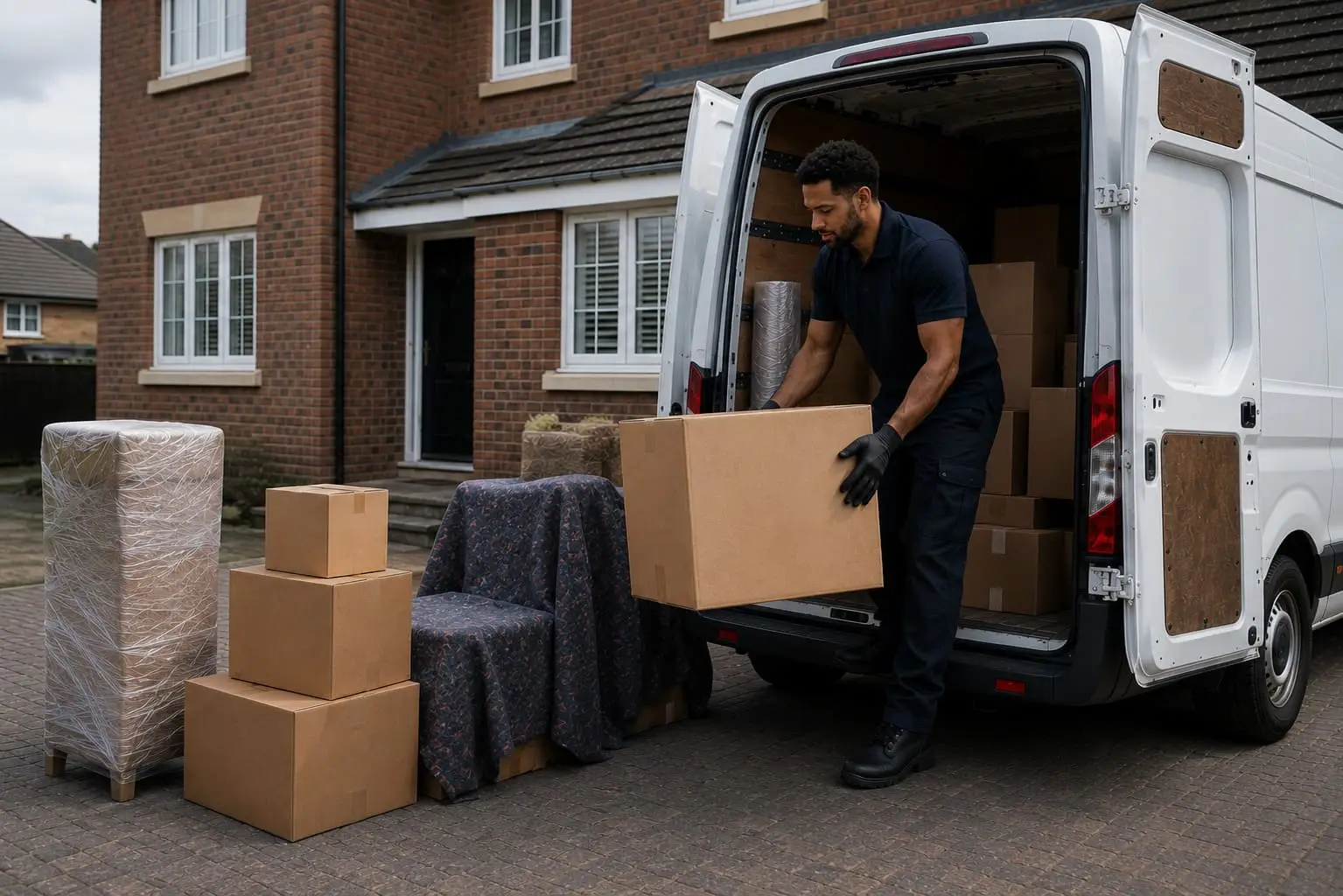
Full, partial, or materials-only packing from the same team that moves you.
Get a Free QuoteWhat size boxes are best for moving house?
Box size matters as much as box number. Large boxes look efficient until they are full of books, tins or tools and become hard to lift, hard to stack and more likely to fail.
Pack heavy items into small boxes. Books, pans, kitchenware, tools, files and some appliances belong in boxes that stay manageable when full. Use larger boxes for light bulky items such as bedding, coats and cushions.
At GT Removals, we would rather see more sensible boxes than fewer overloaded ones. A good box mix makes the van easier to load because boxes stack cleanly and the team can move at a steady pace.
The Health and Safety Executive says UK workplace manual handling guidance does not set a single legal maximum weight for lifting or carrying. Guidance under the Manual Handling Operations Regulations 1992 looks at the whole task, and tools such as the Manual Handling Assessment Charts, called the MAC tool, consider how a load is handled as well as its weight.
For your packing, the plain rule is enough: if you hesitate before lifting a box, repack it into smaller boxes.
Pack books, pans and files in smaller boxes so they stay easy to lift and stack. Large boxes should be kept for lighter items such as bedding, cushions and coats.

Why does the box count matter more in London flats and tight access?
A London flat move can turn a small packing mistake into a slow loading day. If every box has to go down stairs, through a tight hallway or along a long carry from the front door to the van, each extra trip matters.
Too few boxes often means loose bags, open crates and awkward items left until the end. Those items do not stack well in the van, and they slow the load because someone has to gather them, protect them and place them around furniture.
Too many weak boxes create a different problem. If boxes crush or cannot be stacked, van space gets wasted. A Luton van, meaning a large box van with a tail lift, may suit some larger moves, but van choice still depends on furniture volume, access and whether the move needs to be done in one load.
London adds its own planning points. Flats without lifts, narrow stairwells, controlled building access, lift bookings and parking distance all affect timing. A realistic removals quote needs a realistic box count because boxes are carried, stacked and loaded, not counted on paper and forgotten.
A box count belongs in the loading plan as much as on the shopping list.

Write the room and a short contents note on more than one side of each box. That saves time when the boxes are stacked in the van or unloaded into a busy hallway.

How should you label boxes and plan your first-night box?
Once the boxes are chosen, the next job is making them useful at the other end. Labels should tell the team where a box goes and give you enough detail to find what you need without opening everything.
A simple room plus contents note works well. “Kitchen, glasses” gives more useful information than “Kitchen” on its own.
- Write the destination room on more than one side of each box, so the label can still be read when boxes are stacked.
- Add a short contents note. Keep it simple, such as “Bedroom, shoes” or “Kitchen, pans”.
- Mark fragile boxes clearly, but do not rely on the word alone. Pack those items properly before they reach the van.
- Keep one first-night box with you. Do not load it into the van.
- Put bedding, toiletries, chargers, kettle basics, a change of clothes, documents and keys in that first-night box.
That small system saves time when unloading. It also stops the first evening in the new home becoming a search through unmarked boxes.
How can packing help make the box count clearer?
Once you have chosen a starting range, checked hidden storage and picked the right box sizes, the remaining question is whether you want to pack everything yourself. Self-packing works well when you have time and a clear count. Packing help becomes useful when the kitchen is full, fragile items need care, heavy books are spread through the home or storage areas are still uncertain.
A removals team can also check the estimate through a survey or packing discussion. That does not mean you have failed to count properly. It means the plan gets checked before the van, team and materials are set.
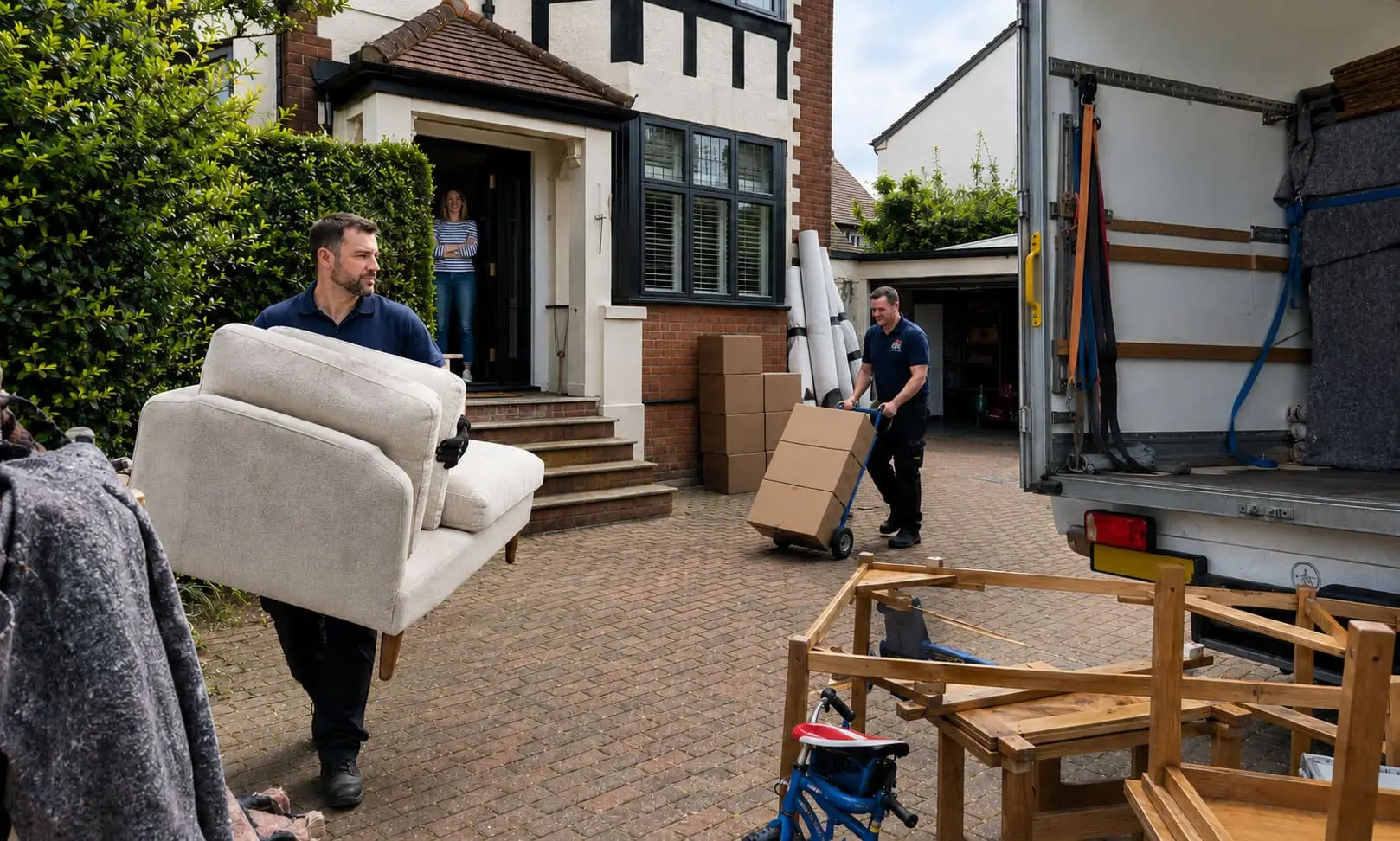
At GT Removals, we use different sizes of packing boxes, bubble wrap, clear film wrap and vinyl tape when we pack for customers. Furniture is wrapped individually, upholstery can be protected with covers, vulnerable items are packed with protected covering and boxes, and items are labelled by room.
Once you know what to check, the box count stops being a guess. You start with the home size, look behind the cupboard doors, choose boxes that can be lifted and labelled, then decide whether any part of the packing needs a trained pair of hands.
Let our team wrap and box your belongings so everything arrives safely.
Get a Free QuoteQuestions London movers ask us about moving boxes
How many boxes do I need to pack a kitchen?
A kitchen often needs more boxes than people expect because many items are small, breakable or awkward to stack. We suggest checking every cupboard, drawer and appliance shelf before you decide your final box count.
Should I buy extra moving boxes?
Yes, a small buffer is sensible if you have full cupboards, books, spare bedding or storage areas. Running short late in the packing process usually causes more trouble than having a few unused boxes.
Do removal teams need the exact number of boxes?
No, a removals team does not need a perfect number, but the estimate should be realistic. A poor count can affect van space, loading time and the way the job is planned.
How early should I start packing before a move?
Many 1 bedroom moves can be packed in 1 to 2 days, many 2 bedroom moves take 2 to 4 days, and many 3 bedroom moves take 3 to 5 days. Start earlier if you have lots of storage, children’s rooms, books or a busy kitchen.
Can I use bags instead of boxes for some items?
Bags can work for soft items, but they do not stack as cleanly as boxes and they can slow loading if there are too many. For most belongings, proper moving boxes make the move easier to load, carry and unload.
This is general information, not professional advice.