
What catches people out most when moving in West London?
In our experience, West London moves go wrong when parking, access, building rules, road charges, volume or key timing are left vague. Boxes matter, but the real delay usually starts when the van cannot stop close enough, the lift was never booked or the quote missed the hard parts of the job.
Start With Access, Not Boxes
Moving in West London is rarely as simple as van plus labour. Two flats with the same amount of furniture can take very different time if one has a clear loading bay and lift, and the other has a long walk from a Controlled Parking Zone, or CPZ, bay and three flights of stairs.
From White City across Shepherd’s Bush, Hammersmith, Acton, Ealing, Kensington, Chelsea and Fulham, the first question we look at is access. We want to know where the van can legally stop, how far the team carries items, whether a lift is available and whether anyone controls entry to the building.
Packing still matters. A badly packed home slows everyone down. Yet poor house move planning shows up faster outside the property than inside it. A driver reaching the road with no legal place to load has a bigger problem than a few open boxes.
Once you treat the move as a logistics job, the awkward parts become much easier to deal with before moving day.
An employed team, published pricing, and full insurance on every job, from a single item to a full house.
Get a Free QuoteBook Parking the Borough Way
A removal van reaching your street with the nearest legal space too far away changes the whole job. Every extra carry from the front door to the van adds time, and in West London that time can build fast.
Parking is borough-specific. Ealing, Kensington and Chelsea, Hammersmith and Fulham and other London boroughs do not all use one shared rulebook for parking bay suspensions, yellow line dispensations or resident bays. Current council pages need checking before the move, because fees, notice periods and application routes differ.
Ealing Council makes one point very clear: placing bins or cones on the road to reserve parking is illegal. A parking suspension for a removal van is an official borough arrangement, and informal space-saving can leave the crew with no workable loading point.
In Ealing, the council lists parking suspensions at £39 per bay, per day when applied for at least 7 working days before the start date, or £50 per bay, per day with at least 3 working days’ notice. It also says a suspended bay cannot be guaranteed clear if someone parks there illegally. A suspension lowers the risk, but the move still needs a backup plan.
At GT Removals, we check parking early on West London jobs because it affects the quote as much as the schedule. A van parked outside the door is a different job from a van parked around the corner.
Before move day, check:
- Whether either address sits inside a Controlled Parking Zone, or CPZ.
- Whether a parking bay suspension is needed for the removal van.
- Yellow line loading rules, and whether a dispensation is needed.
- Who is applying for the suspension, because guessing this late causes problems.
- If the bay is blocked, agree where the van can stop without risking a Penalty Charge Notice, or PCN.
Official parking keeps the move workable. Cones, bins and handwritten notes do not reserve the space you need.
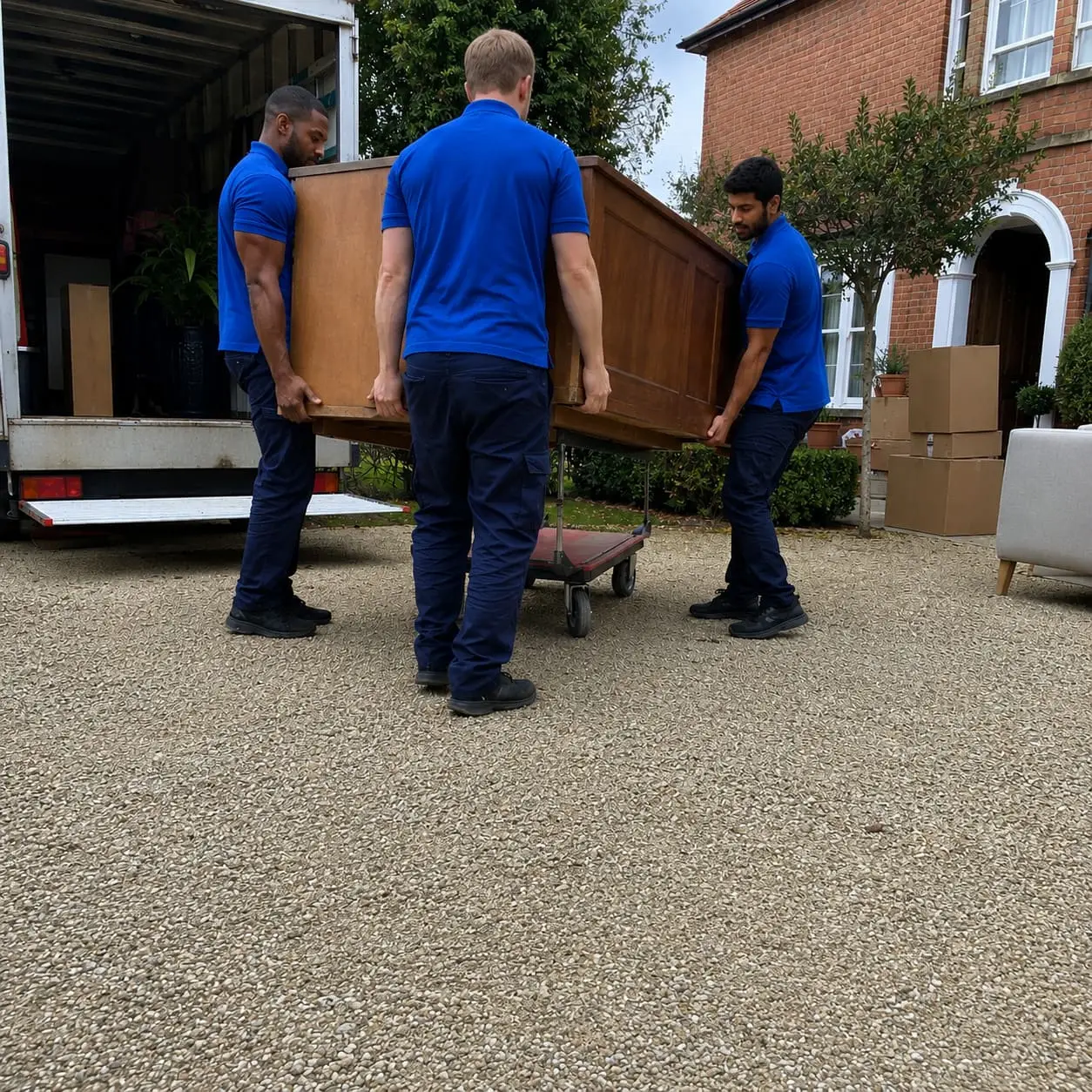
If your flat has a concierge, include the desk details, lift booking rules and any loading bay restrictions in the first message. Those small points often decide whether the first hour runs smoothly.

Check Building Rules Early
Flat moves often need more planning than house moves because someone else controls part of the access. Building management, a concierge desk, a loading bay or a lift booking can decide when the removal team is allowed to work.
Managed apartment blocks, mansion blocks, estates and converted houses all create different access issues. A modern block may have a service lift and time slot. A converted house may have a tight communal hallway, awkward stairs and no place for the van close to the door. Both details matter before the quote is final.
Book Lifts and Loading Bays
A lift that needs booking is not a small admin detail. If the lift slot is missed, the team may have to wait, use stairs or work around other residents using the same lift.
Loading bays and service entrances can also be controlled by building management. Some buildings want the van in a set place, and some want moves kept within certain hours. We do not need your building’s whole rulebook, but we do need the practical parts that affect access.
Concierge desks matter too. Key release, reception access and lift keys can all slow the first hour if nobody has checked them. Passing those notes on before moving day gives the team a clear route into the building.
Flag Stairs and Long Carries
Stairs change labour. Long walking distance changes timing. Narrow hallways change how furniture is protected and moved.
A third-floor flat with no lift is not priced the same way as a ground-floor flat with a loading bay beside the entrance. Neither situation is a problem in itself, but both need to be known. The issue starts when the removal team finds out at the door.
For removals for flats in West London, good access notes are simple: floor level, lift use, stair carry, hallway width, loading point and any building time slot. Those few details give the quote a much firmer base.

Price the Move Around Real Conditions
A low starting price can look attractive at first, then fall apart when the real job appears. The number of boxes matters, but so do the distance to the van, the stairs, the lift rules, the road charges and whether unwanted items are still sitting in the hallway on moving morning.
Here is how missed detail changes a moving house quote.
| Detail people miss | How it affects the move |
|---|---|
| Parking distance | A longer carry adds time and can mean more labour is needed. |
| Stairs | Heavy furniture takes longer to move safely when there is no lift. |
| Lift booking | A missed or short lift slot can hold up loading or unloading. |
| Packing volume | Extra boxes can change van size, loading time or the number of trips. |
| Unwanted items | Items left for disposal can block the move or need separate handling. |
| Road charges | The Congestion Charge zone, Ultra Low Emission Zone, or ULEZ, and Low Emission Zone, or LEZ, need checking against the route and vehicle. |
| Completion timing | Late key release in a property chain can create waiting time. |
Transport for London lists the Congestion Charge at £18 if paid on the day of travel or in advance, and £21 if paid within 3 days after travel. ULEZ and LEZ costs depend on the vehicle and its compliance, so the right answer sits inside the quote, not as a guess on moving day.
At GT Removals, we use video surveys by WhatsApp, Zoom or FaceTime where the job needs it, then put the scope into a fixed written quote. Clear scope beats a vague hourly guess because it ties the price to the actual move: volume, access, parking, road charges and timing.
For house removals, applicable road charges are dealt with inside the fixed written price. For hourly man and van work, the Congestion Charge applies separately if the job enters the zone. That distinction matters because it keeps the cost clear before anyone lifts the first box.
If parking looks tight, check the borough rules before you count boxes. A legal loading space can matter more than the volume of the move when the van needs to stop close to the property.

Finish With Fewer Unknowns
A West London move looks different once you stop asking only how many boxes there are. The better question is where the van will stop, how the team gets in, what the building allows and what the quote has actually included.
From our White City base, we plan local removals around those details because they decide the shape of the day. A parking suspension, lift slot, loading access note or accurate packing volume is not paperwork for the sake of it. It is the difference between a move that runs to plan and one that has to be rebuilt outside the property.
Insurance still belongs in the picture. Goods in transit insurance covers belongings while they are on the van, and our jobs carry £30,000 goods in transit cover and £5 million public liability insurance. Those figures matter, but they sit behind the practical plan. The first win is still getting the access right.
Once you know what to check, moving day stops being a vague van booking and becomes a planned job with known access, known timing and a written scope that reflects the real property.
Call, fill in the form, or send a few photos on WhatsApp and most quotes come back within a few hours.
Get a Free QuoteQuestions we get asked about moving in West London
Can I use cones outside my home for the moving van?
No. Ealing Council says placing bins or cones on the road to reserve parking is illegal. Use the proper borough route if a bay needs to be held for a removal van.
Who pays for a parking suspension when moving house?
The person arranging the move usually agrees this with the removal team before the booking is finalised. The main point is to decide it early, because each borough has its own process and timing.
Does a removal van have to pay ULEZ in London?
ULEZ depends on the vehicle and whether it meets the Ultra Low Emission Zone rules. A compliant fleet avoids that charge, but you should make sure any road charge position is clear in the written quote.
What should I tell the removals team if my flat has a concierge?
Tell the team about the concierge desk, lift booking, loading bay, service entrance and any time limits for moving. Those details affect how the team plans arrival, loading and labour.
Is a video survey enough for a West London house move?
A video survey can be enough when it shows the furniture, box volume, access and any awkward items clearly. For a fixed written quote, the survey needs to cover both what is being moved and how the team will reach the van.
This is general information, not professional advice.