What is the quick yes, no and ask first answer?
A rubbish removal van in London can usually take ordinary household junk, furniture, cardboard, bagged general waste and garden cuttings. You should ask first about sofas, fridges, freezers, electricals, mixed black bags and garage waste. A standard van should not take asbestos, chemicals, wet paint, gas bottles, clinical waste or tyres.
Picture the usual pre-collection pile: bags by the front door, a broken chair in the hallway, flat-pack boards from a wardrobe, a fridge from the kitchen, old paint from under the stairs and a sofa that has seen better days. Calling all of it “rubbish” feels normal at home, but once it reaches a van, each item may need a different disposal route.
- Usually yes: household junk, broken furniture, cardboard, packaging, bric a brac, bagged domestic waste and garden cuttings.
- Ask first: sofas and other upholstered seating, fridges, freezers, electrical items, mixed black bags, shed waste and unidentified containers.
- Standard van no: asbestos, chemicals, solvents, wet paint, gas cylinders, clinical waste, tyres and anything unsafe or unknown.
That split matters because collection teams do not simply load a pile and hope for the best. They have to know what the waste is, where it can lawfully go and whether it can be mixed with other items.
A small paint tin can cause more difficulty than a large bookcase. An old sofa can look ordinary but may fall under rules for Persistent Organic Pollutants, known as POPs. Sorting the pile before collection day is the difference between a smooth clearance and items being refused at the kerb.

What can usually go in a rubbish removal van?
Ordinary household clearance items can usually go in a rubbish removal van, provided they are described honestly and can be taken through the right disposal route. Think of everyday unwanted items from a flat, house, loft, garden or end-of-tenancy clear-out.
Living room and bedroom waste often includes a broken chest of drawers, a dismantled wardrobe, a small table, old shelving, toys, lamps, kitchenware and general bric a brac. Cardboard from a move, packaging from new furniture and bags from a bedroom clear-out are also common. GOV.UK makes clear that household waste is wider than regular black bin bag waste, and gives old mattresses, furniture and household appliances as examples from a domestic property.
Garden waste may also be suitable when it is ordinary material such as cuttings, small branches and bagged leaves. Loose soil, rubble-heavy sacks or mixed shed contents need more care because weight, contamination and unknown items can change the answer.
After a move, clearance piles often contain flattened boxes, unwanted curtains, a cracked mirror, plastic storage tubs and bags of odds and ends. Those items usually sit in the normal household rubbish removal London category, but the team still needs to know what is in the bags. “Black bags” is too broad if one bag holds clothes and another holds half-used tins from a garage shelf.
Mixed or unidentified waste is where simple clearances become awkward. A bag of bedding is one thing; a sealed bag containing batteries, paint, tools and chemical bottles is another. The label on the booking should match the reality on the floor.
Which items need checking before the van arrives?
Some items are not an automatic no, but they should never be sprung on the team at the door. Sofas, fridges, freezers, electricals, mixed black bags and mystery garage contents all need early detail because the problem is often the disposal route, not the lifting.
Sofas and upholstered seating
A sofa looks like normal bulky waste until the rules behind it are checked. Environment Agency guidance says waste upholstered domestic seating may contain Persistent Organic Pollutants, known as POPs. Examples include sofas, sofa beds, armchairs, recliners, kitchen and dining chairs, garden furniture, stools, footstools, some office chairs, futons, bean bags, floor cushions, sofa cushions, child car seats, highchairs and benches.
Material matters too. Guidance covers seating parts made of, or containing, leather, synthetic leather, fabric or foam. Waste domestic seating containing POPs must be described as “domestic seating waste containing POPs”, with List of Waste code 20 03 07.
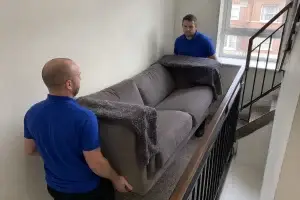
Operationally, that means sofa rubbish removal in London is not just a question of whether two people can carry it down the stairs. GT Removals asks for awkward items such as upholstered seating to be declared in advance because separation, description and onward route matter once the item leaves the property.
Fridges, freezers and electrical items
Fridges and freezers deserve the same caution. GOV.UK lists equipment containing ozone depleting substances, such as fridges, among hazardous waste examples. That does not mean every electrical item is dealt with in the same way, but it does mean a fridge should never be treated as just another bulky object beside a wardrobe.
Small appliances, cables and general electrical items should be flagged before the van arrives. Clear detail helps the clearance team decide whether the item fits the planned load and whether a suitable authorised waste facility is involved.
Mixed black bags and garage contents
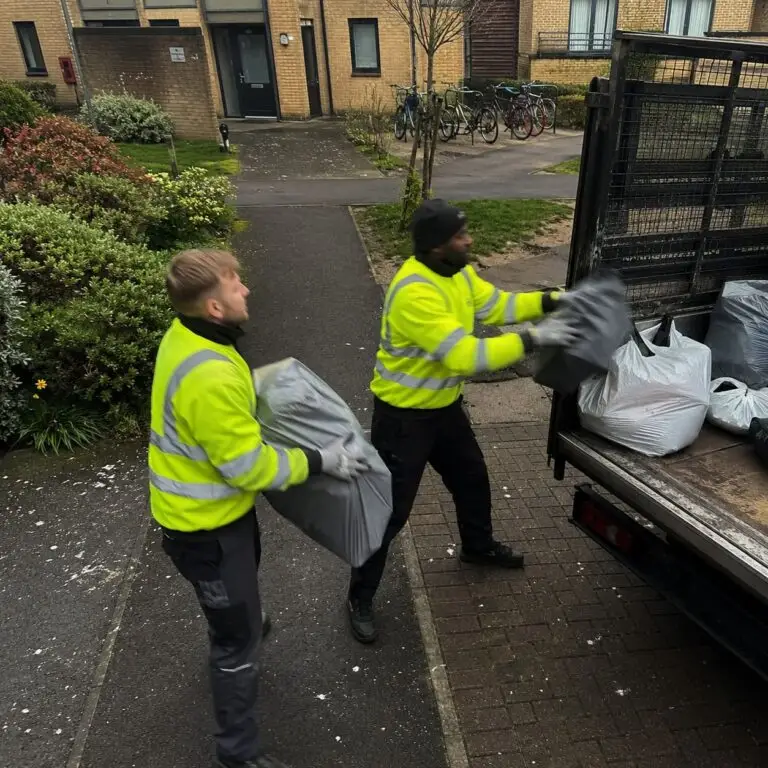
Black bags can be fine when they contain normal household clear-out waste, such as clothes, bedding, toys or kitchen odds and ends. Problems start when bags contain unknown liquids, batteries, sharp objects, paint tins or shed chemicals. A driver cannot safely identify hidden contents by weight or shape alone.
Garage and shed clear-outs need the most honesty. Old containers lose labels, lids leak and the person booking the collection may not know what was stored there. In practice, “a few bags from the shed” can mean harmless plant pots or a set of containers that should never go on a standard rubbish removal van.
A licensed waste carrier with same-day collection and responsible disposal to licensed facilities.
Get a Free QuoteWhat cannot go in a standard rubbish removal van?
Hazardous or specialist waste should not be loaded into a standard rubbish removal van, even if the item is small and would fit easily. Size does not decide suitability. Contents, risk and disposal route decide it.
GOV.UK describes hazardous waste as waste that is generally harmful to humans or the environment. Examples include asbestos, chemicals, batteries, solvents, pesticides, oils except edible oils, equipment containing ozone depleting substances such as fridges, and hazardous waste containers.
Asbestos, chemical containers, solvents, pesticides and oils need a suitable specialist route. Half-used paint tins under the stairs can also cause problems, especially if the paint is wet or the container is leaking. A standard household clearance should not become a mixed hazardous load because a few tins were added at the last minute.
Gas cylinders and gas bottles are another hard boundary. A barbecue bottle in a shed may look like a small extra item, but pressurised containers are not ordinary junk. Clinical waste and tyres also sit outside standard rubbish removal for this service context.
Unlabelled containers should be treated with caution. If nobody can say what a liquid, powder or sealed tub contains, the safest answer is no for a normal van collection. Guesswork is not a disposal method.
Photograph black bags before collection if they come from different rooms or storage areas. The image often reveals whether the load is ordinary household waste or a mixed clearance that needs checking.

What does the law expect from you as the householder?
Householders in England have a duty to take reasonable measures to transfer household waste only to an authorised person. GOV.UK says this applies to occupiers of domestic property dealing with household waste produced on that property.
An authorised person can include someone with valid registration as a waste carrier, broker or dealer, or a waste management operator with an environmental permit or registered exemption. A tidy van, a quick advert or a low price does not prove authorisation. Evidence of registration is what matters.
GOV.UK says people should ask for evidence and use the public register to check it. Waste carrier, broker and dealer registrations in England can be checked on the Environment Agency public register, or by calling 03708 506 506. GT Removals is registered as a waste carrier, broker and dealer with the Environment Agency, which is the relevant trust point for rubbish removal rather than a general claim about taking every type of waste.
Domestic occupiers dealing with their own household waste do not need a waste transfer note. That point often gets muddled. Business waste and certain other transfers can involve written waste descriptions or notes, but a householder clearing their own flat is not expected to handle the same paperwork as a commercial waste producer.
If rubbish is fly-tipped after collection, the question may turn back to whether reasonable checks were made before it left the property. Keeping a record of who took the waste and checking registration is a simple safeguard that takes far less effort than trying to trace a dumped load later.
What should you tell the rubbish removal team before collection?
A clearance team needs to know what the waste is, not just how much space it appears to take. A “half van” of clean furniture is a different job from the same space filled with mixed bags, electricals and an old sofa.
Start with the bulky items. Name the sofa, fridge, mattress, wardrobe, table, bookcase or appliance, and say whether items are upstairs, outside, in a basement or behind a narrow entrance. London access can be tight, so stairs, parking, lifts and long carries affect loading even before disposal is considered.
Next, describe the bags. Bagged clothes, bedding, toys and general bedroom clear-out waste are much easier to assess than “twenty black bags from everywhere”. If some bags come from a shed, loft, cellar or garage, say so. Those areas often hide old tins, batteries, chemicals or sharp items.
Photos help because they show scale, access and obvious exceptions. They also reveal details people forget to mention, such as a fridge in the corner or loose tins under a shelving unit. Our team at GT Removals treats clear item descriptions as a sorting tool, because the planned load has to match what can lawfully be carried and where it can go.
Unclear items should be raised early, not found during loading. A collection can be planned around known awkward waste, but hidden items can delay the job or need a different authorised route altogether.
Separate sofas and upholstered seating from the rest of the pile as early as possible. These items can require a distinct description and disposal route, which helps the booking stay accurate.

Where should hazardous or specialist items go instead?
Hazardous and specialist items need the correct authorised route, which may be different from standard rubbish removal. The right answer is not to hide them in black bags or describe them vaguely; the right answer is to keep them separate and use a route suited to that waste type.
For householders, the starting point is usually official local guidance or an authorised waste facility that accepts the relevant item. Rules can differ by waste stream, and London borough arrangements should be checked through the proper local authority channel rather than assumed from a neighbour’s experience.
Businesses face extra duties when they produce, store, collect, transport, receive, recycle or dispose of hazardous waste. GOV.UK separates responsibilities for producers or holders, carriers and consignees. That matters for landlords clearing business premises, shops, offices or mixed-use spaces, where waste may no longer be simple domestic household waste.
For non hazardous waste transfers where a written description is required, GOV.UK says a waste transfer note can be paper based or electronic. A season ticket can cover a series of non hazardous waste transfers and can last up to one year. Those details matter more for business and repeat waste movements than for a tenant clearing personal household items.
Specialist disposal can feel slower, but it is the cleaner decision. A wet paint tin, gas bottle or unknown chemical is not made safe by placing it behind a broken chair.
Is a licensed rubbish removal van allowed to take everything?
The common misconception is that a waste carrier registration is a universal permission slip. It is not. GOV.UK describes a waste carrier as someone who normally and regularly collects, carries or transports waste in the course of business or for profit, but the waste type still controls what can be collected and where it can go.
Authorisation matters because householders should use an authorised person, but authorisation does not turn every item into suitable van waste. Environment Agency guidance says waste upholstered domestic seating containing POPs should not be mixed with other waste during collection. It can be on the same vehicle only if it is not mixed, does not contaminate other waste and is separated when unloaded. That seating must go for destruction through an authorised route, not landfill.
A broken chair and a tin of wet paint may both fit in a van, but they do not belong in the same decision. The misconception to drop is simple: “licensed” does not mean “able to take anything”. The better question is whether this exact item belongs on this exact disposal route.
From single items to a full van load, we clear and dispose of it for you.
Get a Free QuoteFrequently asked questions
Can a rubbish removal van take a sofa?
A rubbish removal van may be able to take a sofa, but it should be declared before collection. Upholstered domestic seating may fall under POPs guidance, so it needs the correct description, separation and disposal route.
Can a man and van take black bags?
Black bags can often be taken when they contain ordinary household clear-out waste. Bags from sheds, garages or unknown areas should be described carefully because hidden paint, chemicals, batteries or sharp items can change the answer.
Can rubbish removal take paint tins?
A standard rubbish removal van should not take wet paint, leaking paint tins or unknown paint containers. Paint should be kept separate and sent through a suitable authorised route.
Do I need a waste transfer note for my own household rubbish?
A domestic occupier dealing with their own household waste does not need a waste transfer note. The key duty is to take reasonable steps to use an authorised person.
Does a waste carrier registration mean every item can go in the van?
Waste carrier registration shows authorisation to carry waste in the course of business, but it does not cover every waste type. The item and its disposal route still decide whether it belongs on the van.