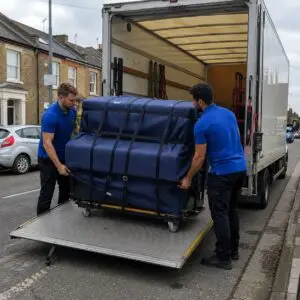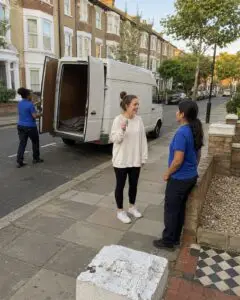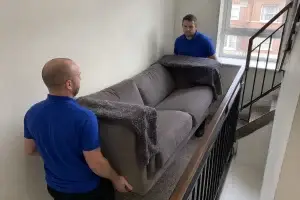

What makes moving in Wimbledon, Putney or Wandsworth harder than people expect?
A short local move can take longer than expected if the van cannot load close to the door. Parking rules, bay length, stairs, lifts, building access and timing usually matter more than mileage in Wimbledon, Putney and Wandsworth, especially for flats and streets inside Controlled Parking Zones.

Local Roads Look Familiar, But Moving Day Finds the Weak Spots
A move of half a mile can be harder than a move across London if the van has to stop far from the entrance. Distance affects the route, but access affects every box, chair, wardrobe and appliance that has to leave the property.
Most people budget for van size, number of rooms and travel time. Moving day often turns on smaller details: whether a Luton van can pull up safely, whether the loading route crosses a busy pavement, whether the lift has to be booked, and whether the front door opens onto a narrow shared hallway.
Wimbledon, Putney and Wandsworth can look similar on a map, yet they behave differently once a removals team arrives. A converted flat near a controlled bay, a riverfront block with concierge rules, and a terraced house on a narrow street all need different planning. Familiar roads can still hide long carries, awkward turns and tight time windows.
By quote stage, local knowledge only helps if someone has turned it into practical questions. Where will the van stop? How far is the door from the kerb? Are there stairs, lift limits or move-in rules? Those answers shape the plan long before the first item leaves the room.
A Parking Bay Helps, But It Does Not Remove the Risk
Parking suspension is a planning tool, not a promise that moving day will run perfectly. A suspended parking bay can still be too short, too far from the entrance, or blocked by another vehicle.
In a Controlled Parking Zone, the right question is wider than “Can I get a space outside?” A removals plan needs enough kerbside length for the vehicle, a safe loading route and a backup if the bay cannot be used. Merton Council Parking Services says one parking bay is approximately five to six metres long and recommends checking with the removals team how many bays are needed.
For a Putney flat move, a bay outside the building entrance may work well if the lift is booked and the van can load close to the door. A bay around the corner can turn the same flat into a longer job because every item needs a long carry. That extra walking distance matters when the van is sitting in a timed loading position.
Before fixing the plan, check these points:
- Bay length. Confirm whether one bay is enough for the vehicle and loading space.
- Entrance distance. Look at the actual walk from van position to front door, not the address on the map.
- Signs and cones. Merton says domestic removals are marked with warning signs and cones, and it aims to put signs up seven days before the suspension start date.
- Blocked bay plan. Merton says if someone else parks in a suspended bay, the mover will need to find somewhere else to park because the council does not operate a towing service, although an unauthorised vehicle may receive a PCN.
GT Removals often asks about bay length and van access before a written quote is set, because parking affects labour time as much as vehicle choice. A paid bay that leaves the team carrying furniture down the street can feel like a saving on paper and still cost time on the day.
An employed team, published pricing, and full insurance on every job, from a single item to a full house.
Get a Free QuoteWimbledon Rules Are Not Putney and Wandsworth Rules
The common planning mistake is treating Wimbledon, Putney and Wandsworth as one parking system. Wimbledon sits under Merton rules, while Putney and Wandsworth use Wandsworth Borough Council parking bay suspensions.
Council parking rules carry costs, so treat the figures below as general planning information and confirm current details before applying.
| Area | Council process | Notice period | Main listed charges |
|---|---|---|---|
| Wimbledon in a Merton CPZ | Parking suspension or yellow line waiver through Merton Council Parking Services | At least ten full working days | From 21 April 2026, £36.75 non-refundable admin fee, £36.50 for the first day per bay, £40 per bay per day from day two, and £36.75 for a single yellow line waiver per vehicle per day |
| Putney and Wandsworth | Domestic parking bay suspension through Wandsworth Borough Council | At least seven clear working days, excluding submission day | Booking fee of £82.50 for ten working days’ notice or £93.20 for seven working days’ notice, plus CPZ suspension charge of £43.20 for the first day per five metre space and £35.20 for extra consecutive days per five metre space |
| Putney and Wandsworth yellow line or non-CPZ request | Yellow line waiver or non-CPZ suspension, subject to approval | Wandsworth timing rules apply | £59.40 for the first five metre space per day and £59.40 for each additional five metre space per day |
Wimbledon and Merton
For moving in Wimbledon inside a Merton Controlled Parking Zone, residents can ask for a parking bay suspension for moving house. They can also apply for a yellow line waiver, which is council permission to park on a yellow line for the approved purpose.
Merton Council Parking Services requires applications at least ten full working days before the requested start date. That timing matters for end-of-month moves, school holiday dates and moves planned close to bank holidays, because working days do not stretch just because the move date is fixed.
Putney, Wandsworth and Wandsworth Borough Council
For removals in Putney and moving house in Wandsworth, Wandsworth Borough Council rules apply. Its domestic parking bay suspension form is for domestic parking bays, not for skip materials or structure licences.
Wandsworth requires at least seven clear working days’ notice from 1 May 2025, excluding the day of submission. Weekends and bank holidays do not count, and applications must arrive by 3pm for that day to count. Submitting the form does not confirm the suspension, and the council can refuse requests if the location is unsuitable or the bay is already suspended.
Older fee notes passed around between neighbours can be out of date. Current council pages are a safer starting point than a screenshot from someone’s last move.
Confirm the bay length against the van before you apply for a suspension, because one legal space can still leave too little room for loading.

A Short Carry Looks Minor, But It Changes the Whole Quote
A small flat can become a longer job if the team cannot move items cleanly from room to van. Stairs, lift rules and loading distance often affect the plan more than the number of boxes.
Distance inside the job matters. A basement flat with tight steps, a top-floor flat with no lift, or a converted house with a narrow hallway can slow the load even when the inventory looks modest. Shared entrances add another layer, because the team may need to protect common areas, work around neighbours or keep doors closed between trips.
During quoting, the mover needs the truth about access, not a polished version of the property. A video survey can help because the team sees the staircase, hallway, parking position and large furniture before the day. GT Removals offers free video surveys through WhatsApp, Zoom or FaceTime, and fixed-price written quotes rely on those access details being accurate.
Use this disclosure list before quote stage:
- Stairs and lift access. Say which floor you are on, whether there is a lift, and whether the lift must be booked.
- Parking distance. Estimate the walk from the nearest legal stopping point to the entrance.
- Building rules. Ask building management or concierge teams about loading bays, lift padding and move-in times.
- Large or awkward items. Flag wardrobes, sofas, pianos, gym kit, fragile items and anything needing dismantling.
- Vehicle limits. Mention gates, low entrances, tight turns or height restrictions before a Luton van is planned.
Honest detail protects the budget better than optimism. A quote based on “first floor, easy parking” will not match a fourth-floor carry from a bay across the road.
The Van Size Matters Less Than Where It Can Actually Stop
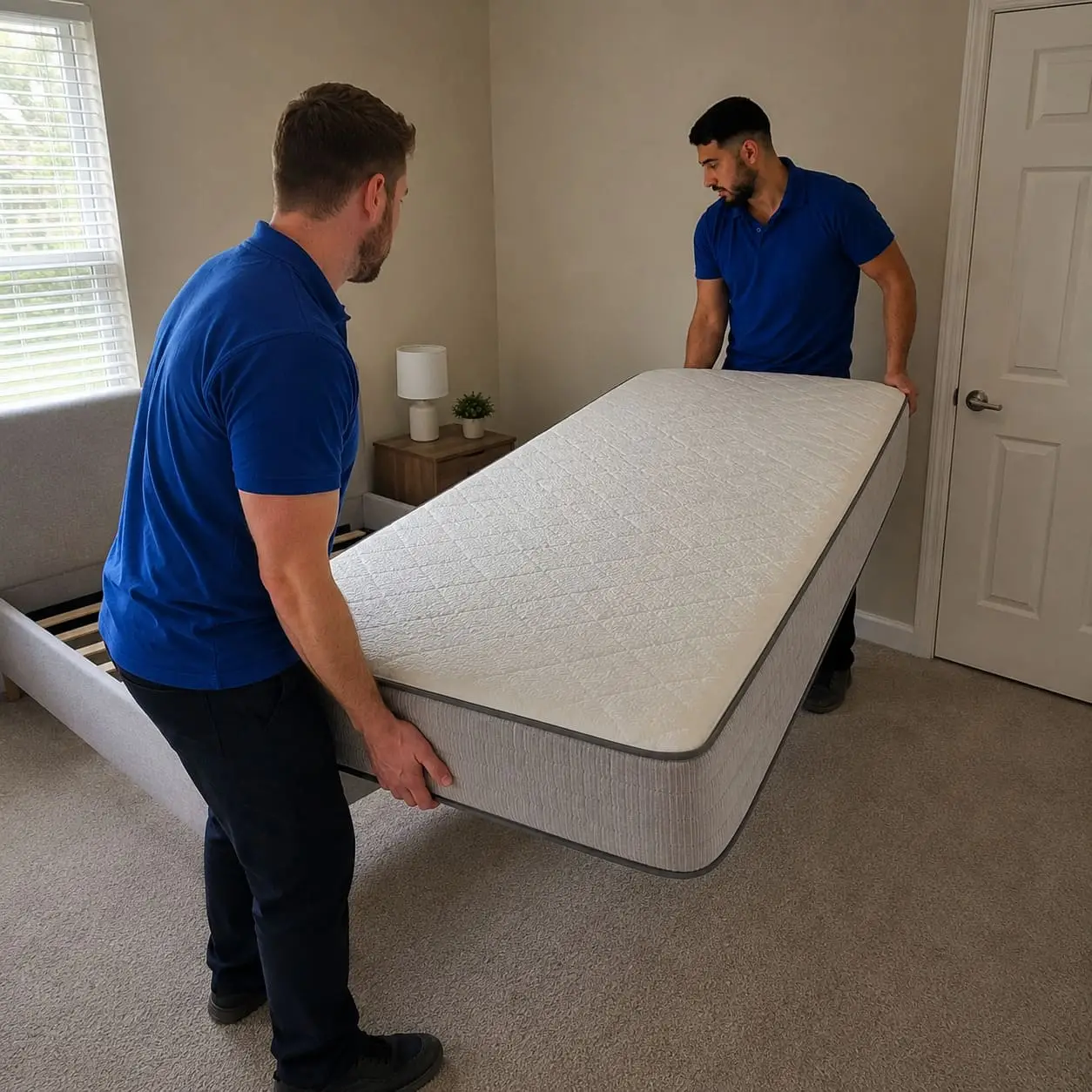
A larger van can reduce trips, but only if it can stop close enough to load safely and legally. The right vehicle is the one that fits both the contents and the street.
On narrow roads, a smaller vehicle can sometimes work better than a bigger one if the loading point is tight. A Luton van with a tail lift is useful for volume and heavier items, but a tail lift still needs space behind the vehicle. Bay length, kerb position and the loading route decide how efficient the van really is.
Yellow line loading should never be treated as a free fallback. Where a yellow line waiver is needed, it must come through the council process and approval is not automatic. A lower hourly rate or larger van can look appealing, then lose its value if the vehicle spends the day parked too far away.
Transport for London states that the Ultra Low Emission Zone applies across all London boroughs and the City of London, with the M25 outside the zone. Vehicles that do not meet ULEZ standards must pay a £12.50 daily charge for driving within the zone, including vans up to and including 3.5 tonnes. For local moving tips across SW19, SW15 and SW18, ULEZ belongs in the vehicle plan, not as an afterthought.
Keep lift booking times and parking notice periods in the same planning note, since one delay can affect the other on a tight move date.

Packing Feels Separate, But It Decides How Long the Move Takes
Packing readiness affects how long the van occupies the bay. Open boxes, loose lamps and last-minute sorting can slow the load even when parking has been planned well.
Loose items create pauses. A removals team can load sealed, labelled boxes in order, but half-packed rooms force decisions at the doorway. Fragile mirrors, small electronics and wardrobe contents need thought before the van arrives, especially in flats where every trip uses a lift or staircase.
Before moving day, focus on the parts that block movement:
- Seal and label boxes. Put the destination room on each box so unloading does not become guesswork.
- Prepare fragile items. Lamps, mirrors, glass and small electronics should be wrapped or clearly set aside.
- Dismantle early where possible. Beds, large tables and awkward wardrobes can block hallways if left until the final hour.
- Keep handover items separate. Keys, chargers, documents, medication and cleaning items should not vanish into the main load.
- Plan clearance separately. Rubbish removal and end-of-tenancy cleaning need their own plan, especially when building rules limit loading time.
Separate “moving” from “deciding what to keep”. A timed bay is a poor place to finish sorting drawers.

The Real Question Is Not Who Knows the Area, But Who Plans for It
Local knowledge has value only when it changes the plan before moving day. For Wimbledon, Putney and Wandsworth, the smarter buyer asks how parking, access, building rules and packing readiness will be handled before the quote is agreed.
Ask any removals team these planning questions:
- Which council process applies? Confirm whether the move falls under Merton Council Parking Services or Wandsworth Borough Council parking bay suspensions.
- Is a parking suspension or yellow line waiver needed? Agree who is arranging it and when the application must be made.
- How much kerbside space is needed? Match the bay length to the vehicle, loading route and street layout.
- What access details affect the quote? Share stairs, lift limits, long carries, tight hallways and large items.
- Are building rules already confirmed? Check lift booking, concierge instructions, loading bay times and move-in rules.
- Is packing ready for the loading plan? Make sure boxes, fragile items and dismantling will not hold up the van.
Smooth local moves are built before the van arrives. The better question is not whether a team knows the area, but whether the plan has already found the weak points that Wimbledon, Putney and Wandsworth tend to reveal on the day.
Call, fill in the form, or send a few photos on WhatsApp and most quotes come back within a few hours.
Get a Free QuoteFrequently asked questions
Do I need a parking suspension for a removal van in Wimbledon?
You may need a parking suspension if your Wimbledon address is in a Merton Controlled Parking Zone and the van needs a bay for loading. A yellow line waiver may be the right route if approved yellow line parking is needed instead.
How much notice do I need for a parking bay suspension in Wandsworth?
Wandsworth requires at least seven clear working days’ notice, excluding the day of submission. Weekends and bank holidays do not count, and applications must be received by 3pm for that day to count.
Can a parking suspension still go wrong on moving day?
A parking suspension reduces risk, but it does not remove every problem. Another vehicle may block the bay, the bay may be too short, or the loading route may still be longer than expected.
What should I tell a removals team before moving from a flat with no lift?
You should share the floor level, staircase width, parking distance, any shared entrance rules, large furniture details and fragile items. These details affect timing, labour and quote accuracy.
Does ULEZ apply to removal vans in Wimbledon, Putney and Wandsworth?
ULEZ applies across all London boroughs and the City of London, so it applies in Wimbledon, Putney and Wandsworth. A non-compliant van may face the daily ULEZ charge when driven inside the zone.